AI Updates
  • Latest News
  • Models & Research
    • AGI & Alignment
    • AI Agents
    • Foundation Models
    • Generative AI
    • Open Source AI
    • Research & Papers
    • Rankings & Benchmarks
  • Infrastructure
    • Chips & Semiconductors
    • Cloud & Networking
    • Data Centers & Neoclouds
    • Developer Platforms
    • Quantum Computing
  • Business
    • Big Tech Strategy
    • Mergers & Acquisitions
    • Public Markets
    • Startups & Funding
    • Talent & Leadership
    • Market Analysis
  • Applications
    • Consumer & Creative
    • Cybersecurity
    • Education & Media
    • Enterprise & Productivity
    • Finance & Legal
    • Healthcare & Life Sciences
    • Industry & Manufacturing
    • Science & Discovery
  • Robotics
    • Autonomous Vehicles
    • Drones & Defense
    • Edge AI & Embodied Intelligence
    • Robotics
  • Energy
    • Cooling & Water
    • Efficiency & Emissions
    • Electricity & Power Grids
    • Nuclear & Renewables
  • Policy & Society
    • AI Safety & Security
    • Copyright & Misinformation
    • Geopolitics
    • Privacy & Human Rights
    • Regulation & Government
    • Work & Society
Stay Ahead of AI

Get the AI developments that matter, delivered to your inbox.

Follow AI Updates
Facebook
Twitter
Instagram
  • Home
  • About
  • News
  • Contact
  • Newsletter
0
0
0
AI Updates AI Updates
AI Updates
  • Latest News
  • Models & Research
    • AGI & Alignment
    • AI Agents
    • Foundation Models
    • Generative AI
    • Open Source AI
    • Research & Papers
    • Rankings & Benchmarks
  • Infrastructure
    • Chips & Semiconductors
    • Cloud & Networking
    • Data Centers & Neoclouds
    • Developer Platforms
    • Quantum Computing
  • Business
    • Big Tech Strategy
    • Mergers & Acquisitions
    • Public Markets
    • Startups & Funding
    • Talent & Leadership
    • Market Analysis
  • Applications
    • Consumer & Creative
    • Cybersecurity
    • Education & Media
    • Enterprise & Productivity
    • Finance & Legal
    • Healthcare & Life Sciences
    • Industry & Manufacturing
    • Science & Discovery
  • Robotics
    • Autonomous Vehicles
    • Drones & Defense
    • Edge AI & Embodied Intelligence
    • Robotics
  • Energy
    • Cooling & Water
    • Efficiency & Emissions
    • Electricity & Power Grids
    • Nuclear & Renewables
  • Policy & Society
    • AI Safety & Security
    • Copyright & Misinformation
    • Geopolitics
    • Privacy & Human Rights
    • Regulation & Government
    • Work & Society
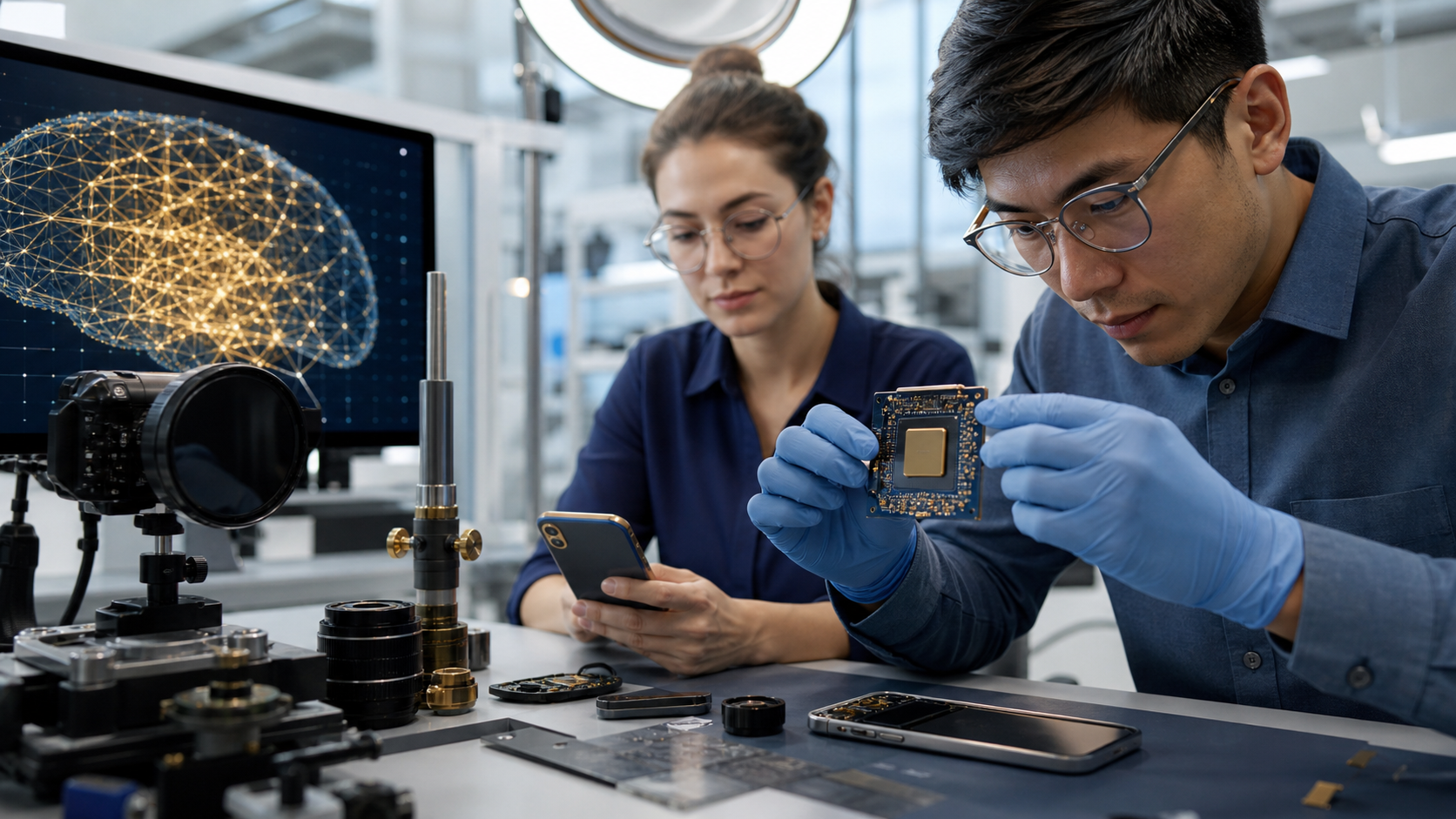
A realistic editorial AI scene for Samsung, neural processing, edge AI, semiconductors and consumer devices.
  • Chips & Semiconductors

Samsung Planned to Strengthen Neural Processing for Future Devices

  • June 25, 2019
  • No comments
Total
0
Shares
0
0
0
0

Samsung’s neural-processing investment reflected a shift toward dedicated AI silicon that could support faster, more private features across phones and other devices.

The development was part of a wider shift in which artificial intelligence became less a standalone research topic and more a layer inside infrastructure, products and public policy. Its significance depended on how the underlying technology was tested, who controlled it and whether the claimed benefit was visible outside a launch announcement.

The Immediate Development

Samsung, neural processing, edge AI, semiconductors and consumer devices formed the core of the story. The original reporting described a specific announcement or reported change, but it also exposed a broader practical question: what would have to happen for this capability to become reliable and useful in the real world?

New AI products commonly combine hardware, data, software and distribution. A headline can focus on one model or component, while performance for users depends on the full system around it. That is why evidence from deployment, not only a company demonstration, remains essential.

Capability Needed Context

Technical progress was meaningful when it improved a clearly defined task. It was less meaningful when a capability claim was detached from the setting in which people would use it.

Teams needed to state the intended use, relevant limitations and the conditions under which results were measured. A benchmark, forecast or product demonstration could be informative, but it did not automatically prove reliability across languages, regions, user groups or changing environments.

Clear context made it easier for customers, regulators and researchers to distinguish a promising result from an overextended conclusion.

Data and Evaluation Shaped the Outcome

Every AI system depended on data, whether the data came from users, sensors, historical records or simulations. The quality, coverage and provenance of that data affected what the system could recognise and where it could fail.

Evaluation therefore had to reflect the real task. Developers should test diverse conditions, report uncertainty and compare a new method with a meaningful baseline. Independent replication could reveal gaps that an internal test missed.

Strong results were useful only when others could understand how they were produced and where they might not transfer.

Infrastructure Was Part of the Product

AI capability was increasingly tied to specialised chips, cloud capacity, networks and software tools. This made infrastructure a strategic issue as well as an engineering one.

Hardware without a mature software ecosystem could be difficult to adopt. Conversely, a good model could be limited by cost, latency, energy use or access to computing. Organisations therefore competed across a stack of components rather than through one specification alone.

Interoperability, documentation and developer support determined whether a platform gained practical momentum.

Governance and Security Could Not Be Deferred

The implications of Samsung, neural processing, edge AI, semiconductors and consumer devices extended beyond performance. Sensitive data, market concentration, geopolitical restrictions and automated decision-making created risks that needed deliberate governance.

Responsible deployment required access controls, audit logs, cybersecurity testing and a clear owner for mistakes. Where people were affected directly, they needed notice, understandable information and a path to correction or human review.

Regulation could set a baseline, but companies also needed internal processes that treated safety and fairness as launch requirements rather than later public-relations work.

Competition Was More Than a Race

Technology coverage often framed AI as a race among companies or countries. Competition could accelerate investment, but it could also encourage inflated claims, secrecy and duplication of expensive infrastructure.

Open standards, research collaboration and independent testing could preserve useful exchange while recognising genuine security concerns. The important question was not only who led a market, but which capabilities became accessible, trustworthy and sustainable.

Customers benefited when they could compare systems on transparent terms rather than accept a single provider’s account of superiority.

People Remained Responsible

AI could automate parts of research, customer service, product design or infrastructure management. It did not remove responsibility from the organisations choosing goals, data and deployment settings.

Workers needed training and a meaningful ability to challenge recommendations. Users needed controls proportionate to the consequence of an action. Leaders needed to measure impacts beyond speed, cost or a single benchmark.

Human judgment was especially important when a system affected privacy, opportunity, safety or public trust.

The Durable Lesson

Samsung’s neural-processing investment reflected a shift toward dedicated AI silicon that could support faster, more private features across phones and other devices.

The durable lesson was that AI progress became valuable through careful implementation. Credible results required transparent evidence, secure infrastructure and governance that matched the consequence of the use case. The strongest organisations were not simply those that announced a capability first; they were those that made it dependable, understandable and useful for the people who had to live with it.


Views: 93
Total
0
Shares
Share 0
Tweet 0
Pin it 0
Share 0
Topics
  • Edge AI
  • neural processing
  • Samsung
  • semiconductors and consumer devices
Previous Article
Editorial AI news image representing AI chip performance.
  • Chips & Semiconductors

AnTuTu’s AI Benchmark Highlighted the Need for Better Chip Comparisons

  • January 30, 2019
View Post
Next Article
A realistic editorial AI scene for Ascend chips, MindSpore, Huawei, server AI and software ecosystem.
  • Chips & Semiconductors

Huawei Unveiled an AI Server Chip Alongside MindSpore

  • August 23, 2019
View Post

Stay Ahead of AI

Get the AI developments that matter, delivered to your inbox.

More AI News
AI-generated conceptual illustration of an unbranded autonomous test sedan with a safety operator, not an actual Pony.ai vehicle or operating service
View Post
  • 3 min
  • Autonomous Vehicles

inDrive’s Kazakhstan Robotaxi Plan Begins With a Feasibility Test

  • October 23, 2026
AI-generated fictional gathering of women learning with laptops, not the real Aged Intelligence Society or its founders
View Post
  • 3 min
  • Work & Society

Aged Intelligence Society Makes AI Learning a Shared Exercise

  • October 23, 2026
AI-generated fictional clinician reviewing abstract diagnostic research materials, not a real patient or clinical trial
View Post
  • 3 min
  • Healthcare & Life Sciences

Microsoft’s New Diagnostic Results Face a Real-World Test

  • October 23, 2026
AI-generated conceptual brass key connecting separate cloud compartments, not an actual network diagram
View Post
  • 3 min
  • Cybersecurity

ConnectWise Incident Shows Why AI Attack Counts Need Context

  • October 23, 2026
AI-generated fictional office team reviewing abstract computer output, not actual Uber employees or premises
View Post
  • 3 min
  • Enterprise & Productivity

Uber Expands ChatGPT Work, With Outcomes Still to Be Measured

  • October 23, 2026
AI-generated conceptual collage of a record connected to blank devices, illustrating distribution through AI agents
View Post
  • 3 min
  • Business & Markets

Spotify Bets on AI Agents as a Distribution Channel

  • October 23, 2026
AI-generated conceptual server illustration showing an intrusion trail predating a protective update, not an actual affected system
View Post
  • 3 min
  • Cybersecurity

AWS Finds PHP Attack Attempts Before Public Disclosure

  • October 22, 2026
AI-generated fictional California technology-company boardroom and campus, not Meta's actual premises
View Post
  • 3 min
  • Big Tech Strategy

Meta Links Its Non-Voting Share Plan to Founder Leadership

  • October 22, 2026

Leave a Reply Cancel reply

Your email address will not be published. Required fields are marked *

Subscribe

Subscribe now to our newsletter

AI Updates
  • About
  • Newsletter
  • Contact
  • Privacy Policy
  • Terms of Use
Artificial Intelligence News

Input your search keywords and press Enter.

Go to mobile version







