AI Updates
  • Latest News
  • Models & Research
    • AGI & Alignment
    • AI Agents
    • Foundation Models
    • Generative AI
    • Open Source AI
    • Research & Papers
    • Rankings & Benchmarks
  • Infrastructure
    • Chips & Semiconductors
    • Cloud & Networking
    • Data Centers & Neoclouds
    • Developer Platforms
    • Quantum Computing
  • Business
    • Big Tech Strategy
    • Mergers & Acquisitions
    • Public Markets
    • Startups & Funding
    • Talent & Leadership
    • Market Analysis
  • Applications
    • Consumer & Creative
    • Cybersecurity
    • Education & Media
    • Enterprise & Productivity
    • Finance & Legal
    • Healthcare & Life Sciences
    • Industry & Manufacturing
    • Science & Discovery
  • Robotics
    • Autonomous Vehicles
    • Drones & Defense
    • Edge AI & Embodied Intelligence
    • Robotics
  • Energy
    • Cooling & Water
    • Efficiency & Emissions
    • Electricity & Power Grids
    • Nuclear & Renewables
  • Policy & Society
    • AI Safety & Security
    • Copyright & Misinformation
    • Geopolitics
    • Privacy & Human Rights
    • Regulation & Government
    • Work & Society
Stay Ahead of AI

Get the AI developments that matter, delivered to your inbox.

Follow AI Updates
Facebook
Twitter
Instagram
  • Home
  • About
  • News
  • Contact
  • Newsletter
0
0
0
AI Updates AI Updates
AI Updates
  • Latest News
  • Models & Research
    • AGI & Alignment
    • AI Agents
    • Foundation Models
    • Generative AI
    • Open Source AI
    • Research & Papers
    • Rankings & Benchmarks
  • Infrastructure
    • Chips & Semiconductors
    • Cloud & Networking
    • Data Centers & Neoclouds
    • Developer Platforms
    • Quantum Computing
  • Business
    • Big Tech Strategy
    • Mergers & Acquisitions
    • Public Markets
    • Startups & Funding
    • Talent & Leadership
    • Market Analysis
  • Applications
    • Consumer & Creative
    • Cybersecurity
    • Education & Media
    • Enterprise & Productivity
    • Finance & Legal
    • Healthcare & Life Sciences
    • Industry & Manufacturing
    • Science & Discovery
  • Robotics
    • Autonomous Vehicles
    • Drones & Defense
    • Edge AI & Embodied Intelligence
    • Robotics
  • Energy
    • Cooling & Water
    • Efficiency & Emissions
    • Electricity & Power Grids
    • Nuclear & Renewables
  • Policy & Society
    • AI Safety & Security
    • Copyright & Misinformation
    • Geopolitics
    • Privacy & Human Rights
    • Regulation & Government
    • Work & Society
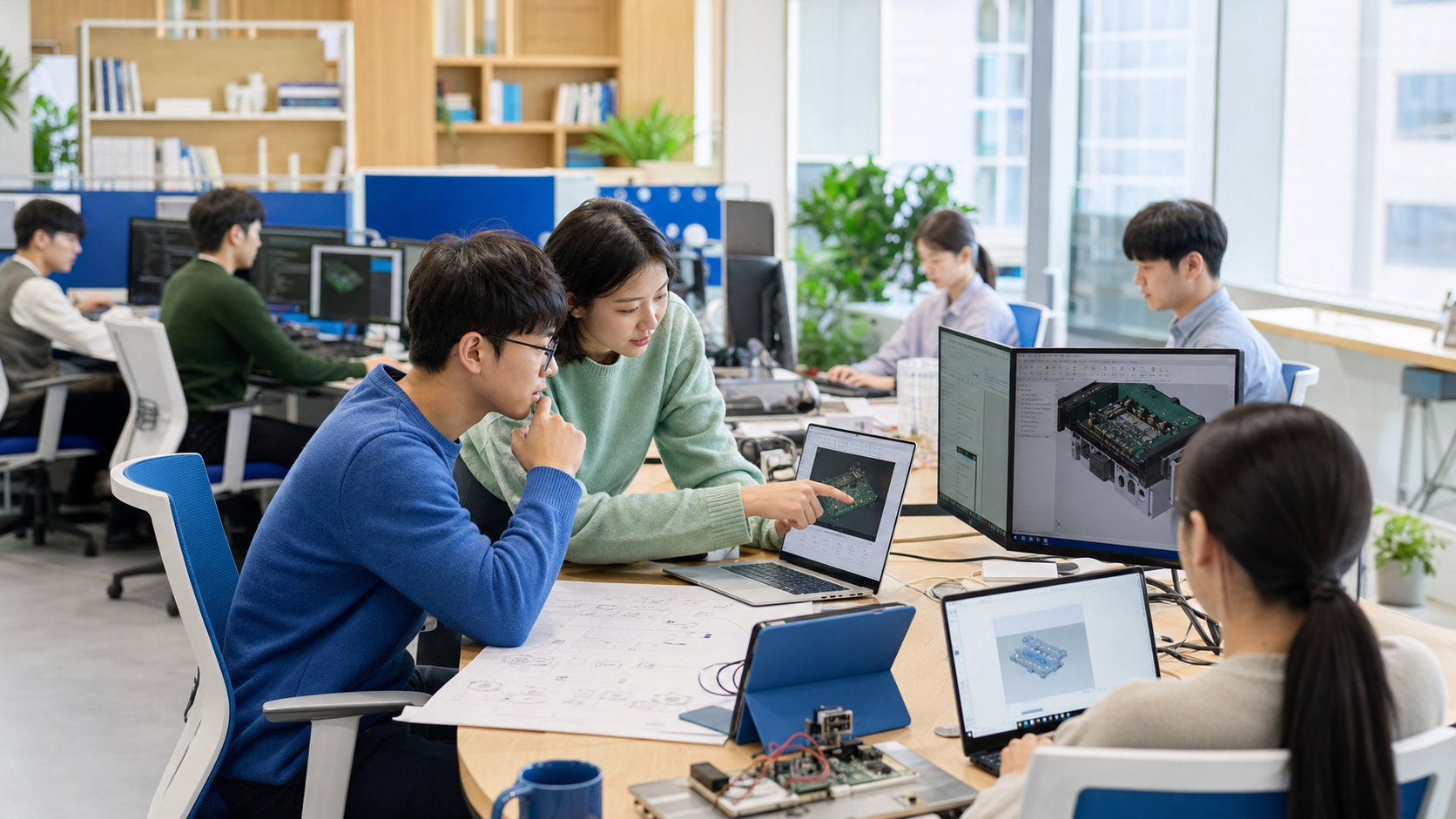
Samsung-style electronics workforce using a governed AI workspace without visible branding
  • Enterprise & Productivity

Samsung Reopens Enterprise AI After Learning From Its Own Data Scare

  • June 24, 2026
  • No comments
Total
0
Shares
0
0
0
0

Samsung Electronics is expanding ChatGPT Enterprise and Codex access to all employees in Korea and the Device eXperience division worldwide. The company expects the tools to support software, marketing, manufacturing, product development and everyday knowledge work.

The rollout is notable because Samsung restricted public generative-AI tools in 2023 after employees uploaded sensitive information. Its return shows how enterprise controls can change the answer from prohibition to managed use—but only if governance reaches daily behaviour.

Enterprise access replaces unmanaged experimentation

ChatGPT Enterprise gives Samsung central user administration, security controls and data protections unavailable when staff use personal accounts. Employees can search information, analyse material, draft documents and develop ideas inside an approved environment.

Codex adds code writing, review and debugging, as well as support for prototypes, websites and automated internal workflows. OpenAI says the tool has more than five million weekly users, with Korean usage growing sharply during 2026.

Broad access reduces shadow AI by giving employees a sanctioned option. It does not make every input appropriate. Product roadmaps, unreleased designs, customer information and semiconductor process data need classification rules that determine which tools and connectors may receive them.

Training should use realistic Samsung examples rather than a generic warning not to share secrets. Employees need to recognise sensitive context hidden inside logs, screenshots and long documents.

Administrators should monitor patterns without reading every employee conversation. Aggregate signals can reveal repeated policy violations, weak training or an overloaded use case, while targeted investigation remains tied to a documented security reason. Clear notice about monitoring helps prevent the enterprise environment from feeling like covert workplace surveillance.

Codex can spread software creation beyond developers

Non-technical teams may use Codex to build small tools and automate repetitive work. That lowers the barrier to solving local problems, but it can also create unsupported applications outside normal engineering oversight.

Samsung needs a path from personal prototype to maintained system. Code affecting data, customers or production should enter version control, testing, security review and named ownership before wider use.

Technical teams should measure defects, review effort and maintainability alongside time saved. Generated volume is not productivity when experienced engineers spend the gain untangling unfamiliar code.

Manufacturing use deserves particular caution. An AI suggestion can inform analysis or draft a procedure, while changes to equipment and quality systems remain protected by deterministic controls and qualified approval.

The strongest outcome is not that every employee becomes a programmer. It is that people can express workflow needs more directly while specialists preserve architecture, security and reliability.

The partnership reaches from employee tools to infrastructure

Samsung and OpenAI already have wider ties. Samsung companies are exploring data-centre services and supplying advanced memory for Stargate, with projected demand reaching hundreds of thousands of DRAM wafers per month.

That relationship places Samsung on both sides of the AI economy: its staff consume models while its semiconductor and services businesses help build the infrastructure that runs them.

Vendor concentration should still be managed. Workflows, prompts and internal connectors need documentation and portability in case pricing, capability or policy changes.

Adoption metrics should focus on completed work, decision quality and avoided rework. External surveys show many companies report broad productivity gains, yet far fewer can identify concrete time savings.

Samsung’s earlier restriction was a rational response to uncontrolled use. The new deployment will succeed if it preserves that security lesson while enabling useful experimentation.

Enterprise AI becomes sustainable when employees know where the boundary lies, managers can see how systems are used and a fast prototype does not bypass the controls protecting a global manufacturer. Reopening access is the beginning of that operating model, not proof that the risk has disappeared.


Views: 111
Total
0
Shares
Share 0
Tweet 0
Pin it 0
Share 0
Topics
  • ChatGPT
  • Codex
  • Samsung
  • Security
  • Workplace
Previous Article
Content team managing reusable material across several channels from one governed workspace
  • Enterprise & Productivity

AI-Native CMS Platforms Turn Content Operations Into Infrastructure

  • June 16, 2026
View Post
Next Article
Enterprise operations team connecting software security partners and device health through a governed AI layer
  • Enterprise & Productivity

HP Uses OpenAI Frontier to Connect Agents With Enterprise Context

  • June 29, 2026
View Post

Stay Ahead of AI

Get the AI developments that matter, delivered to your inbox.

More AI News
AI-generated conceptual illustration of an unbranded autonomous test sedan with a safety operator, not an actual Pony.ai vehicle or operating service
View Post
  • 3 min
  • Autonomous Vehicles

inDrive’s Kazakhstan Robotaxi Plan Begins With a Feasibility Test

  • October 23, 2026
AI-generated fictional gathering of women learning with laptops, not the real Aged Intelligence Society or its founders
View Post
  • 3 min
  • Work & Society

Aged Intelligence Society Makes AI Learning a Shared Exercise

  • October 23, 2026
AI-generated fictional clinician reviewing abstract diagnostic research materials, not a real patient or clinical trial
View Post
  • 3 min
  • Healthcare & Life Sciences

Microsoft’s New Diagnostic Results Face a Real-World Test

  • October 23, 2026
AI-generated conceptual brass key connecting separate cloud compartments, not an actual network diagram
View Post
  • 3 min
  • Cybersecurity

ConnectWise Incident Shows Why AI Attack Counts Need Context

  • October 23, 2026
AI-generated fictional office team reviewing abstract computer output, not actual Uber employees or premises
View Post
  • 3 min
  • Enterprise & Productivity

Uber Expands ChatGPT Work, With Outcomes Still to Be Measured

  • October 23, 2026
AI-generated conceptual collage of a record connected to blank devices, illustrating distribution through AI agents
View Post
  • 3 min
  • Business & Markets

Spotify Bets on AI Agents as a Distribution Channel

  • October 23, 2026
AI-generated conceptual server illustration showing an intrusion trail predating a protective update, not an actual affected system
View Post
  • 3 min
  • Cybersecurity

AWS Finds PHP Attack Attempts Before Public Disclosure

  • October 22, 2026
AI-generated fictional California technology-company boardroom and campus, not Meta's actual premises
View Post
  • 3 min
  • Big Tech Strategy

Meta Links Its Non-Voting Share Plan to Founder Leadership

  • October 22, 2026

Leave a Reply Cancel reply

Your email address will not be published. Required fields are marked *

Subscribe

Subscribe now to our newsletter

AI Updates
  • About
  • Newsletter
  • Contact
  • Privacy Policy
  • Terms of Use
Artificial Intelligence News

Input your search keywords and press Enter.

Go to mobile version







