AI Updates
  • Latest News
  • Models & Research
    • AGI & Alignment
    • AI Agents
    • Foundation Models
    • Generative AI
    • Open Source AI
    • Research & Papers
    • Rankings & Benchmarks
  • Infrastructure
    • Chips & Semiconductors
    • Cloud & Networking
    • Data Centers & Neoclouds
    • Developer Platforms
    • Quantum Computing
  • Business
    • Big Tech Strategy
    • Mergers & Acquisitions
    • Public Markets
    • Startups & Funding
    • Talent & Leadership
    • Market Analysis
  • Applications
    • Consumer & Creative
    • Cybersecurity
    • Education & Media
    • Enterprise & Productivity
    • Finance & Legal
    • Healthcare & Life Sciences
    • Industry & Manufacturing
    • Science & Discovery
  • Robotics
    • Autonomous Vehicles
    • Drones & Defense
    • Edge AI & Embodied Intelligence
    • Robotics
  • Energy
    • Cooling & Water
    • Efficiency & Emissions
    • Electricity & Power Grids
    • Nuclear & Renewables
  • Policy & Society
    • AI Safety & Security
    • Copyright & Misinformation
    • Geopolitics
    • Privacy & Human Rights
    • Regulation & Government
    • Work & Society
Stay Ahead of AI

Get the AI developments that matter, delivered to your inbox.

Follow AI Updates
Facebook
Twitter
Instagram
  • Home
  • About
  • News
  • Contact
  • Newsletter
0
0
0
AI Updates AI Updates
AI Updates
  • Latest News
  • Models & Research
    • AGI & Alignment
    • AI Agents
    • Foundation Models
    • Generative AI
    • Open Source AI
    • Research & Papers
    • Rankings & Benchmarks
  • Infrastructure
    • Chips & Semiconductors
    • Cloud & Networking
    • Data Centers & Neoclouds
    • Developer Platforms
    • Quantum Computing
  • Business
    • Big Tech Strategy
    • Mergers & Acquisitions
    • Public Markets
    • Startups & Funding
    • Talent & Leadership
    • Market Analysis
  • Applications
    • Consumer & Creative
    • Cybersecurity
    • Education & Media
    • Enterprise & Productivity
    • Finance & Legal
    • Healthcare & Life Sciences
    • Industry & Manufacturing
    • Science & Discovery
  • Robotics
    • Autonomous Vehicles
    • Drones & Defense
    • Edge AI & Embodied Intelligence
    • Robotics
  • Energy
    • Cooling & Water
    • Efficiency & Emissions
    • Electricity & Power Grids
    • Nuclear & Renewables
  • Policy & Society
    • AI Safety & Security
    • Copyright & Misinformation
    • Geopolitics
    • Privacy & Human Rights
    • Regulation & Government
    • Work & Society
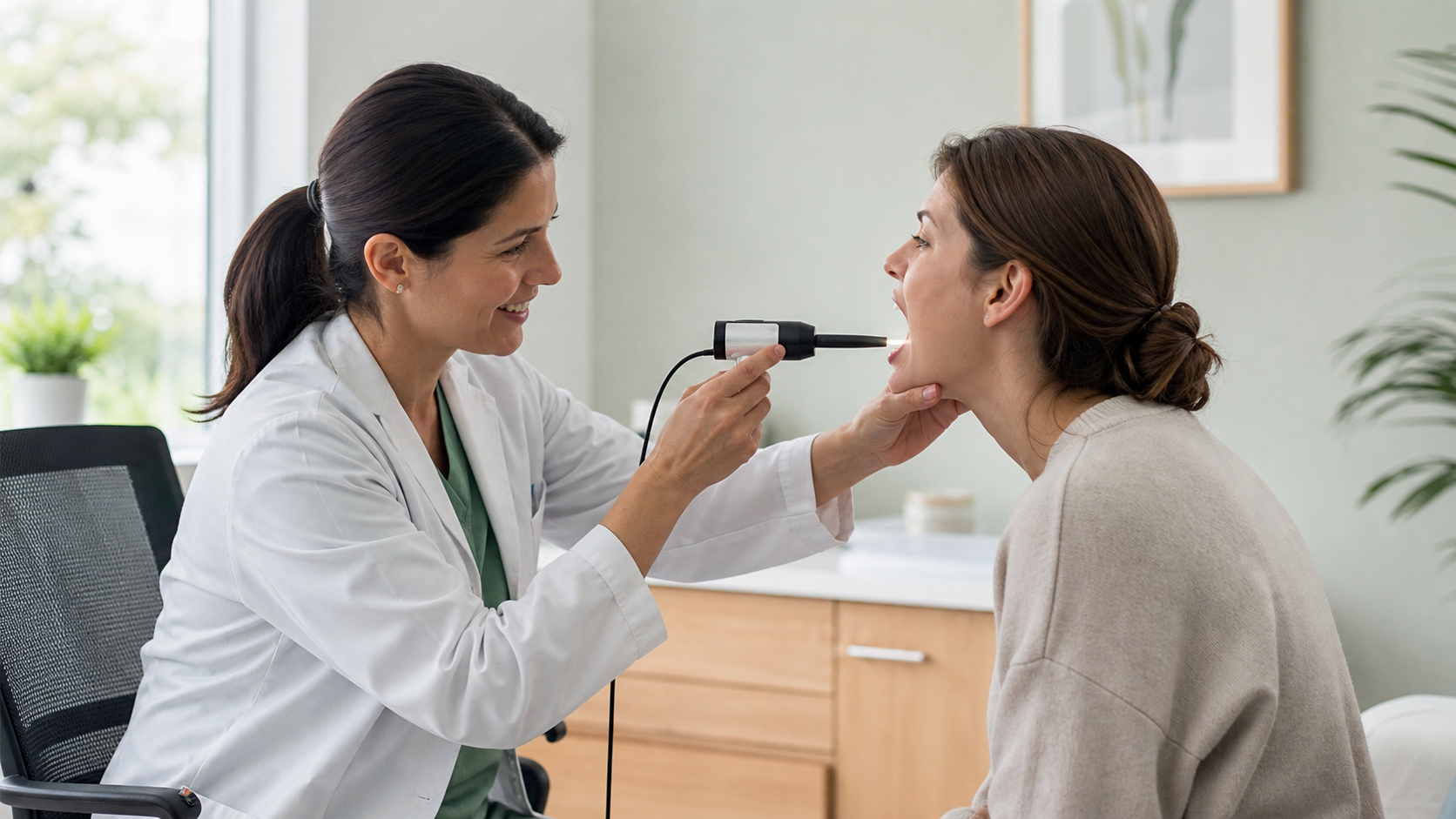
A clinician using a compact camera-based throat examination device in a calm consultation room
  • Healthcare & Life Sciences

Nodoca Shows How Medical AI Becomes a Clinical Product

  • August 5, 2026
  • No comments
Total
0
Shares
0
0
0
0

A Japanese medical device called Nodoca replaces an uncomfortable nasal swab with images of the throat, patient interview information and an AI assessment delivered in a little over 10 seconds. Its significance is not merely faster diagnosis. The system shows how clinical AI can become useful when it is designed around a specific workflow, validated as a medical device and integrated into ordinary care.

Developer Iris received Japanese approval for Nodoca as a new medical device in 2022, when it also gained national health insurance coverage. More than 2,000 medical institutions in Japan now use it, according to Wired. An additional function related to Covid-19 was approved in October 2025. These are concrete adoption milestones, although they do not by themselves establish performance in other countries or populations.

A camera changes the patient experience

Conventional influenza testing often requires a swab inserted deep into the nose. It can be painful and may be less useful early after symptoms begin. Nodoca captures images of the pharynx with a compact camera and combines them with clinical information to produce an influenza assessment.

Reducing discomfort can have practical value, particularly for children and people who avoid testing. A rapid result may also help a clinic decide on treatment and infection precautions during a short appointment. The system’s narrow purpose is an advantage: clinicians know what question it is designed to answer.

The device should not be described as an autonomous doctor. Its output sits inside a medical consultation that includes symptoms, history and professional judgment. An AI assessment can support that process, but it cannot account for every alternative diagnosis or complication.

Regulation turned a model into infrastructure

Many healthcare AI announcements remain pilots because deployment requires more than a trained algorithm. Hardware must be reliable, staff must learn the procedure, reimbursement must exist and regulators must review evidence. Nodoca’s insurance coverage and use across thousands of institutions indicate that Iris addressed several of those barriers.

Founder Shunsuke Okuyama’s experience working on a small island influenced the project. With limited equipment, he relied heavily on direct observation. He argues that medical AI should improve the entire diagnostic encounter rather than focus only on the final classification.

That philosophy is visible in Nodoca’s combination of imaging and interview data. Still, the source does not provide sensitivity, specificity or head-to-head results needed to compare it with every conventional test. Approval supports a defined use under Japanese rules, not a universal claim of superiority.

Clinicians also need a clear route when the output conflicts with symptoms or professional judgment. A useful device should expose its intended population and limitations, support confirmatory testing and avoid pressuring staff to accept a rapid result simply because it is convenient.

Expansion will test whether the evidence travels

Iris believes throat tissue is sufficiently consistent for data and algorithms developed in Japan to transfer elsewhere. The company is preparing for overseas expansion and considering US clinical trials. That is a vendor projection that must be tested rather than assumed.

Clinical performance can shift with population differences, disease prevalence, camera technique and healthcare settings. A US trial would need to show not only diagnostic accuracy but also how the device fits local regulation, reimbursement and clinical practice. Transparency about errors will be as important as speed.

Nodoca nevertheless offers a useful model for applied healthcare AI. It begins with a familiar patient problem, uses purpose-built hardware and delivers a bounded output to a professional. The technology is sophisticated, but the product proposition is simple: make a common examination less invasive without removing the clinician.

If wider trials confirm the results, the device could demonstrate that some of AI’s most valuable medical roles will not look like general intelligence. They will look like carefully regulated tools that improve one moment of care and earn adoption clinic by clinic.
Views: 105
Total
0
Shares
Share 0
Tweet 0
Pin it 0
Share 0
Topics
  • Diagnostics
  • Influenza
  • Medtech
  • Nodoca
Previous Article
A pathologist examining a whole-slide tissue image alongside an AI diagnostic dialogue
  • Healthcare & Life Sciences

PRISM2 Turns Pathology Slides Into Diagnostic Dialogue

  • August 5, 2026
View Post
Next Article
A clinician and patient viewing different levels of explanation for the same medical AI result
  • Healthcare & Life Sciences

Health AI Explanations Can Help—or Mislead—the Wrong User

  • August 6, 2026
View Post

Stay Ahead of AI

Get the AI developments that matter, delivered to your inbox.

More AI News
AI-generated conceptual illustration of an unbranded autonomous test sedan with a safety operator, not an actual Pony.ai vehicle or operating service
View Post
  • 3 min
  • Autonomous Vehicles

inDrive’s Kazakhstan Robotaxi Plan Begins With a Feasibility Test

  • October 23, 2026
AI-generated fictional gathering of women learning with laptops, not the real Aged Intelligence Society or its founders
View Post
  • 3 min
  • Work & Society

Aged Intelligence Society Makes AI Learning a Shared Exercise

  • October 23, 2026
AI-generated fictional clinician reviewing abstract diagnostic research materials, not a real patient or clinical trial
View Post
  • 3 min
  • Healthcare & Life Sciences

Microsoft’s New Diagnostic Results Face a Real-World Test

  • October 23, 2026
AI-generated conceptual brass key connecting separate cloud compartments, not an actual network diagram
View Post
  • 3 min
  • Cybersecurity

ConnectWise Incident Shows Why AI Attack Counts Need Context

  • October 23, 2026
AI-generated fictional office team reviewing abstract computer output, not actual Uber employees or premises
View Post
  • 3 min
  • Enterprise & Productivity

Uber Expands ChatGPT Work, With Outcomes Still to Be Measured

  • October 23, 2026
AI-generated conceptual collage of a record connected to blank devices, illustrating distribution through AI agents
View Post
  • 3 min
  • Business & Markets

Spotify Bets on AI Agents as a Distribution Channel

  • October 23, 2026
AI-generated conceptual server illustration showing an intrusion trail predating a protective update, not an actual affected system
View Post
  • 3 min
  • Cybersecurity

AWS Finds PHP Attack Attempts Before Public Disclosure

  • October 22, 2026
AI-generated fictional California technology-company boardroom and campus, not Meta's actual premises
View Post
  • 3 min
  • Big Tech Strategy

Meta Links Its Non-Voting Share Plan to Founder Leadership

  • October 22, 2026

Leave a Reply Cancel reply

Your email address will not be published. Required fields are marked *

Subscribe

Subscribe now to our newsletter

AI Updates
  • About
  • Newsletter
  • Contact
  • Privacy Policy
  • Terms of Use
Artificial Intelligence News

Input your search keywords and press Enter.

Go to mobile version







