AI Updates
  • Latest News
  • Models & Research
    • AGI & Alignment
    • AI Agents
    • Foundation Models
    • Generative AI
    • Open Source AI
    • Research & Papers
    • Rankings & Benchmarks
  • Infrastructure
    • Chips & Semiconductors
    • Cloud & Networking
    • Data Centers & Neoclouds
    • Developer Platforms
    • Quantum Computing
  • Business
    • Big Tech Strategy
    • Mergers & Acquisitions
    • Public Markets
    • Startups & Funding
    • Talent & Leadership
    • Market Analysis
  • Applications
    • Consumer & Creative
    • Cybersecurity
    • Education & Media
    • Enterprise & Productivity
    • Finance & Legal
    • Healthcare & Life Sciences
    • Industry & Manufacturing
    • Science & Discovery
  • Robotics
    • Autonomous Vehicles
    • Drones & Defense
    • Edge AI & Embodied Intelligence
    • Robotics
  • Energy
    • Cooling & Water
    • Efficiency & Emissions
    • Electricity & Power Grids
    • Nuclear & Renewables
  • Policy & Society
    • AI Safety & Security
    • Copyright & Misinformation
    • Geopolitics
    • Privacy & Human Rights
    • Regulation & Government
    • Work & Society
Stay Ahead of AI

Get the AI developments that matter, delivered to your inbox.

Follow AI Updates
Facebook
Twitter
Instagram
  • Home
  • About
  • News
  • Contact
  • Newsletter
0
0
0
AI Updates AI Updates
AI Updates
  • Latest News
  • Models & Research
    • AGI & Alignment
    • AI Agents
    • Foundation Models
    • Generative AI
    • Open Source AI
    • Research & Papers
    • Rankings & Benchmarks
  • Infrastructure
    • Chips & Semiconductors
    • Cloud & Networking
    • Data Centers & Neoclouds
    • Developer Platforms
    • Quantum Computing
  • Business
    • Big Tech Strategy
    • Mergers & Acquisitions
    • Public Markets
    • Startups & Funding
    • Talent & Leadership
    • Market Analysis
  • Applications
    • Consumer & Creative
    • Cybersecurity
    • Education & Media
    • Enterprise & Productivity
    • Finance & Legal
    • Healthcare & Life Sciences
    • Industry & Manufacturing
    • Science & Discovery
  • Robotics
    • Autonomous Vehicles
    • Drones & Defense
    • Edge AI & Embodied Intelligence
    • Robotics
  • Energy
    • Cooling & Water
    • Efficiency & Emissions
    • Electricity & Power Grids
    • Nuclear & Renewables
  • Policy & Society
    • AI Safety & Security
    • Copyright & Misinformation
    • Geopolitics
    • Privacy & Human Rights
    • Regulation & Government
    • Work & Society
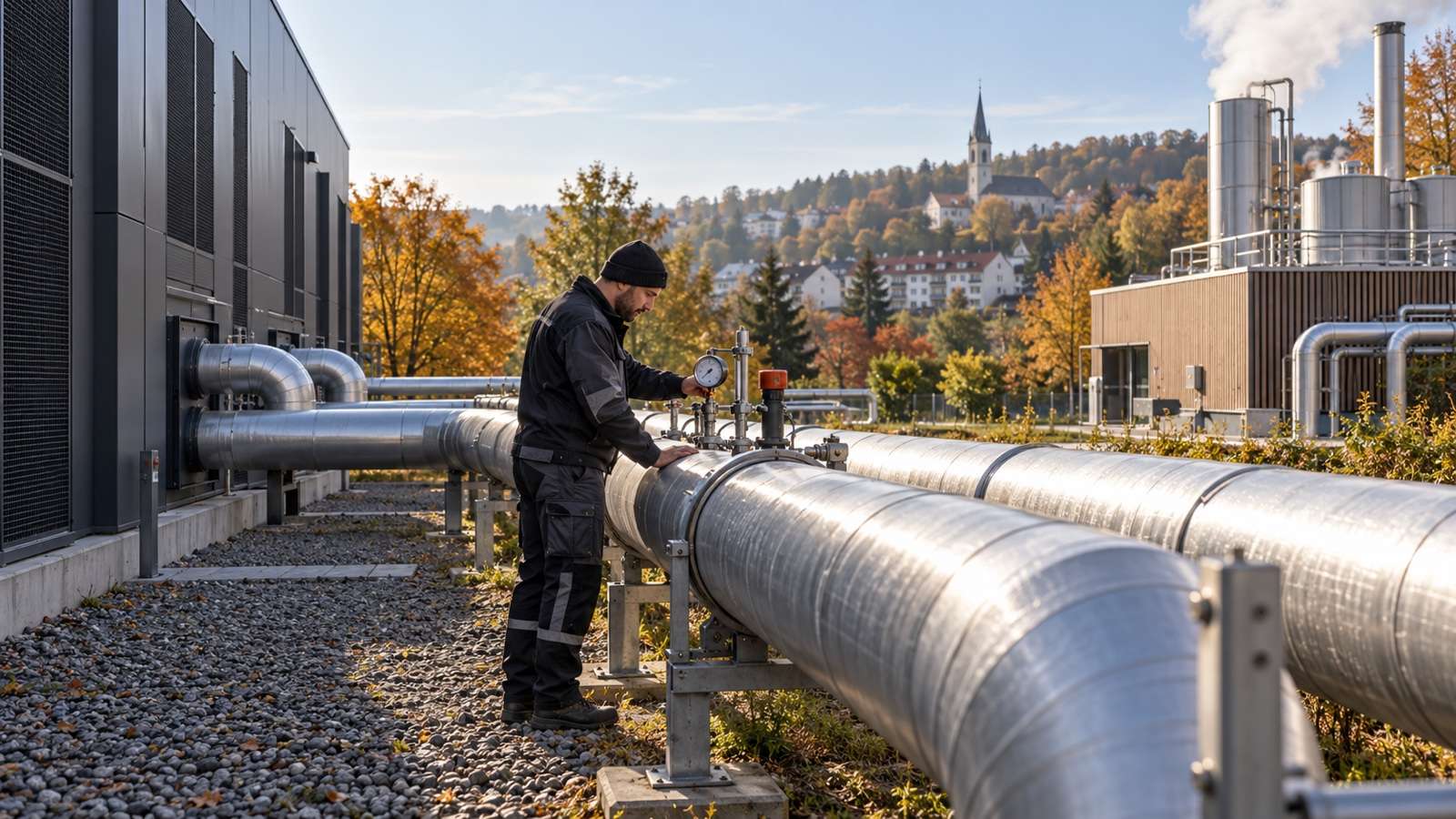
AI-generated fictional engineer inspecting insulated heat-reuse pipes near a European data center, not an actual facility
  • Energy & Sustainability

Germany’s Data Center Heat Debate Requires More Than an Efficiency Score

  • October 21, 2026
  • No comments
Total
0
Shares
0
0
0
0

Europe’s push for more AI infrastructure is exposing a practical policy question: who must make a data center’s waste heat useful? WIRED’s new report examines Germany’s proposed relaxation of heat-reuse requirements and the disagreement surrounding it. Understanding that debate requires separating three things that are easily blurred together: the law currently published, a proposed change and voluntary measures for improving a facility’s efficiency.

The published law already distinguishes different circumstances

Germany’s Energy Efficiency Act, section 11, sets requirements for facilities beginning operation from July 2026. Its published text combines a power-usage-effectiveness ceiling of 1.2 with energy-reuse requirements that increase across successive opening dates: 10 percent initially, followed by planned shares of 15 and 20 percent for later cohorts. It provides a period after commissioning to meet the applicable annual-average requirements.

The text also contains specified exceptions to the reuse requirement. These include qualifying arrangements to develop nearby heat networks and circumstances involving an unaccepted heat offer, subject to conditions and evidence. It is therefore inaccurate to describe the published regime as an unconditional obligation that ignores every problem finding a heat customer. Equally, those exceptions are not a general exemption for any operator that would prefer not to supply heat.

This distinction changes the policy question. Legislators are not choosing between an entirely inflexible rule and the first recognition that local circumstances matter. They are deciding how a revised obligation would differ from the conditions already written into the law. A credible account should identify the particular requirement being changed rather than treating all environmental conditions as one undifferentiated barrier.

A proposal is not the same as an enacted exemption

WIRED describes a cabinet-backed amendment under which developers would assess whether heat reuse is technically and economically feasible, rather than face the existing mandatory reuse approach. Its account says parliamentary ratification is still ahead. The article also presents disagreement over whether available heat users should determine site selection or whether developers are being burdened with infrastructure they cannot control.

Those are competing judgments about how to allocate responsibility. They do not establish that every canceled development failed because of one statute, or that relaxing a requirement will necessarily produce more completed facilities. A proposed rule may change an investment calculation without resolving other constraints. Causal claims about individual projects need evidence about those projects, not simply the timing of a policy debate.

For a prospective site, the useful questions are concrete. Is there an identified heat user? Who would fund the connection? When would both sides be ready? A technical possibility without an agreed delivery arrangement is not the same as operating heat reuse. Conversely, an agreement worth pursuing should not disappear from view merely because an assessment can be completed on paper.

Efficiency and useful heat measure different things

The European Commission’s Joint Research Centre explained the distinction in its September 2023 account of the EU data-center code. The code is voluntary. One of its measures, PUE, compares total facility input power with power delivered to IT equipment. A lower ratio indicates less facility overhead, not a complete statement about a site’s wider environmental impact.

The JRC’s dated examples include German facilities using recovered heat for offices and storage, alongside cooling and airflow improvements. These are examples of implemented measures in particular settings, not proof that every future site can supply a municipal network on identical terms. The 2023 figures and awards should also not be presented as measurements of Europe’s current AI fleet.

The present debate consequently needs more than a promise of efficient computing or a headline about unused heat. It needs a visible account of what each requirement measures, who controls delivery and what evidence would demonstrate compliance. Germany’s proposed changes can be assessed on those terms without assuming either that climate conditions make construction impossible or that loosening them guarantees a successful AI infrastructure strategy.

Views: 40
Total
0
Shares
Share 0
Tweet 0
Pin it 0
Share 0
Topics
  • Data Centers
  • Energy Efficiency
  • Germany
  • Waste Heat
Previous Article
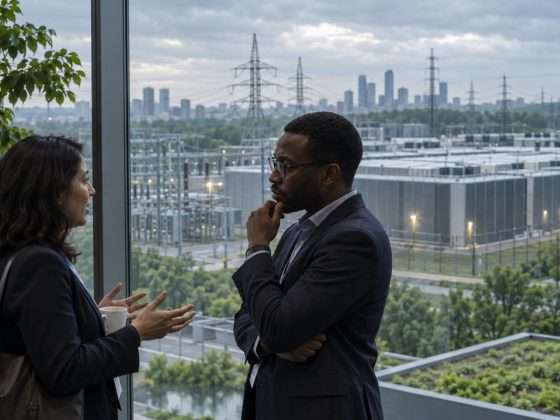
Climate conference attendees discuss a nearby data center and electrical infrastructure
  • Energy & Sustainability

AI Data Center Demand Dominates Climate Week, Leaving Other Startups Uneasy

  • September 29, 2026
View Post

Stay Ahead of AI

Get the AI developments that matter, delivered to your inbox.

More AI News
AI-generated conceptual illustration of an unbranded autonomous test sedan with a safety operator, not an actual Pony.ai vehicle or operating service
View Post
  • 3 min
  • Autonomous Vehicles

inDrive’s Kazakhstan Robotaxi Plan Begins With a Feasibility Test

  • October 23, 2026
AI-generated fictional gathering of women learning with laptops, not the real Aged Intelligence Society or its founders
View Post
  • 3 min
  • Work & Society

Aged Intelligence Society Makes AI Learning a Shared Exercise

  • October 23, 2026
AI-generated fictional clinician reviewing abstract diagnostic research materials, not a real patient or clinical trial
View Post
  • 3 min
  • Healthcare & Life Sciences

Microsoft’s New Diagnostic Results Face a Real-World Test

  • October 23, 2026
AI-generated conceptual brass key connecting separate cloud compartments, not an actual network diagram
View Post
  • 3 min
  • Cybersecurity

ConnectWise Incident Shows Why AI Attack Counts Need Context

  • October 23, 2026
AI-generated fictional office team reviewing abstract computer output, not actual Uber employees or premises
View Post
  • 3 min
  • Enterprise & Productivity

Uber Expands ChatGPT Work, With Outcomes Still to Be Measured

  • October 23, 2026
AI-generated conceptual collage of a record connected to blank devices, illustrating distribution through AI agents
View Post
  • 3 min
  • Business & Markets

Spotify Bets on AI Agents as a Distribution Channel

  • October 23, 2026
AI-generated conceptual server illustration showing an intrusion trail predating a protective update, not an actual affected system
View Post
  • 3 min
  • Cybersecurity

AWS Finds PHP Attack Attempts Before Public Disclosure

  • October 22, 2026
AI-generated fictional California technology-company boardroom and campus, not Meta's actual premises
View Post
  • 3 min
  • Big Tech Strategy

Meta Links Its Non-Voting Share Plan to Founder Leadership

  • October 22, 2026

Leave a Reply Cancel reply

Your email address will not be published. Required fields are marked *

Subscribe

Subscribe now to our newsletter

AI Updates
  • About
  • Newsletter
  • Contact
  • Privacy Policy
  • Terms of Use
Artificial Intelligence News

Input your search keywords and press Enter.

Go to mobile version






