AI Updates
  • Latest News
  • Models & Research
    • AGI & Alignment
    • AI Agents
    • Foundation Models
    • Generative AI
    • Open Source AI
    • Research & Papers
    • Rankings & Benchmarks
  • Infrastructure
    • Chips & Semiconductors
    • Cloud & Networking
    • Data Centers & Neoclouds
    • Developer Platforms
    • Quantum Computing
  • Business
    • Big Tech Strategy
    • Mergers & Acquisitions
    • Public Markets
    • Startups & Funding
    • Talent & Leadership
    • Market Analysis
  • Applications
    • Consumer & Creative
    • Cybersecurity
    • Education & Media
    • Enterprise & Productivity
    • Finance & Legal
    • Healthcare & Life Sciences
    • Industry & Manufacturing
    • Science & Discovery
  • Robotics
    • Autonomous Vehicles
    • Drones & Defense
    • Edge AI & Embodied Intelligence
    • Robotics
  • Energy
    • Cooling & Water
    • Efficiency & Emissions
    • Electricity & Power Grids
    • Nuclear & Renewables
  • Policy & Society
    • AI Safety & Security
    • Copyright & Misinformation
    • Geopolitics
    • Privacy & Human Rights
    • Regulation & Government
    • Work & Society
Stay Ahead of AI

Get the AI developments that matter, delivered to your inbox.

Follow AI Updates
Facebook
Twitter
Instagram
  • Home
  • About
  • News
  • Contact
  • Newsletter
0
0
0
AI Updates AI Updates
AI Updates
  • Latest News
  • Models & Research
    • AGI & Alignment
    • AI Agents
    • Foundation Models
    • Generative AI
    • Open Source AI
    • Research & Papers
    • Rankings & Benchmarks
  • Infrastructure
    • Chips & Semiconductors
    • Cloud & Networking
    • Data Centers & Neoclouds
    • Developer Platforms
    • Quantum Computing
  • Business
    • Big Tech Strategy
    • Mergers & Acquisitions
    • Public Markets
    • Startups & Funding
    • Talent & Leadership
    • Market Analysis
  • Applications
    • Consumer & Creative
    • Cybersecurity
    • Education & Media
    • Enterprise & Productivity
    • Finance & Legal
    • Healthcare & Life Sciences
    • Industry & Manufacturing
    • Science & Discovery
  • Robotics
    • Autonomous Vehicles
    • Drones & Defense
    • Edge AI & Embodied Intelligence
    • Robotics
  • Energy
    • Cooling & Water
    • Efficiency & Emissions
    • Electricity & Power Grids
    • Nuclear & Renewables
  • Policy & Society
    • AI Safety & Security
    • Copyright & Misinformation
    • Geopolitics
    • Privacy & Human Rights
    • Regulation & Government
    • Work & Society
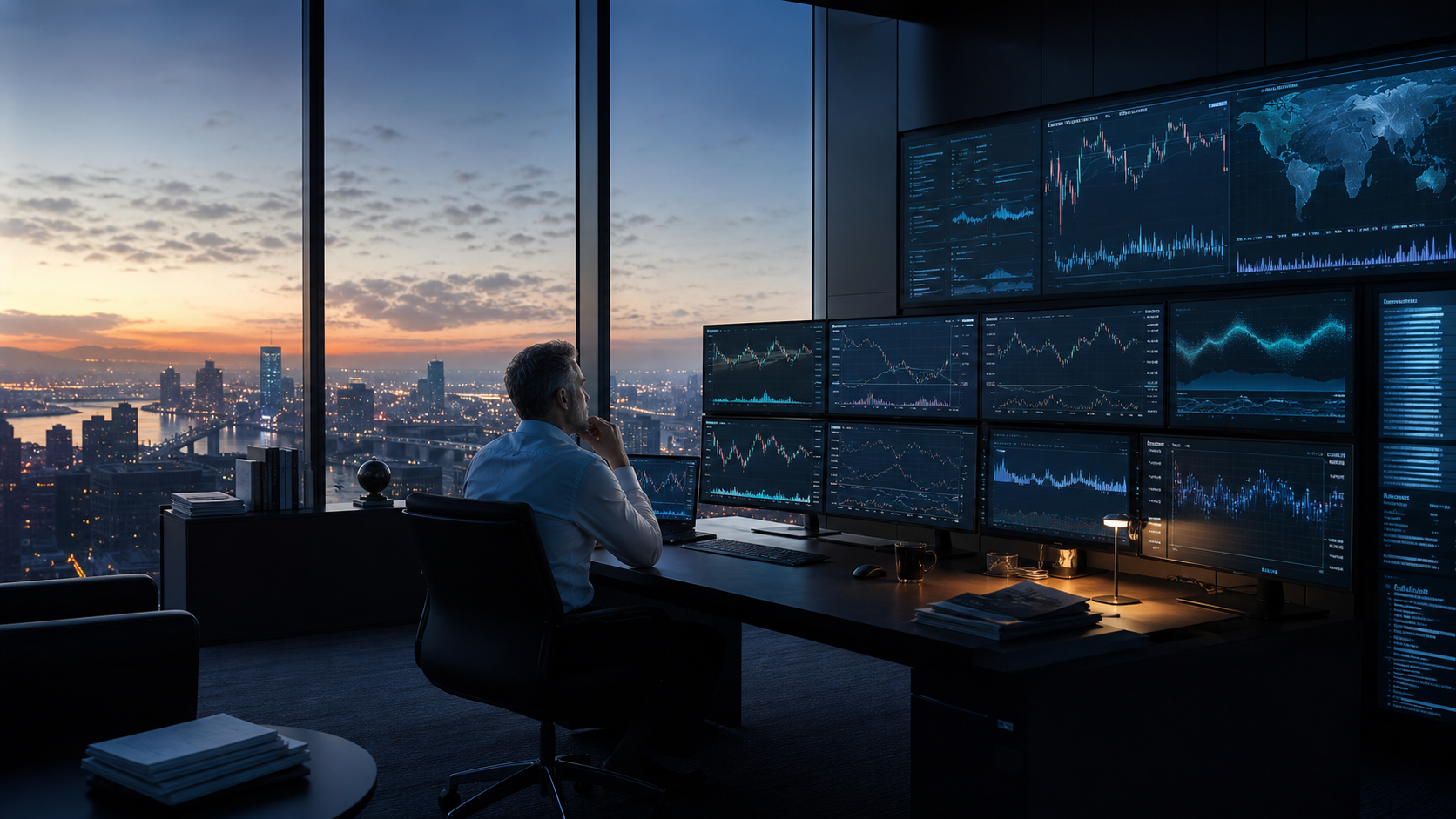
A currency trader supervising an automated system as market signals change across global time zones
  • Finance & Legal

Forex Automation Adds Speed Without Removing Market Uncertainty

  • March 3, 2026
  • No comments
Total
0
Shares
0
0
0
0

Foreign-exchange markets operate continuously across time zones, reacting within seconds to interest-rate expectations, policy announcements, and geopolitical events. That makes them a natural environment for automated analysis and execution—and a dangerous place to confuse speed with foresight.

AI systems can scan prices, economic data, and news without fatigue. They may detect relationships that a person cannot monitor simultaneously and execute when predefined conditions align.

The source describes rapid growth in AI trading platforms and cites estimates that automated systems generate more than 70% of forex volume. The exact figures should be treated cautiously because definitions and market coverage vary, but the direction is clear: machine execution is already central.

Prediction Moves Beyond a Fixed Threshold

A conventional algorithm might buy or sell EUR/USD when the exchange rate crosses a specific level. An AI-driven system can incorporate changing interest-rate expectations, policy language, correlations, and news sentiment before that threshold appears.

This broader context may improve timing or reveal a weak signal. It also creates opacity. When hundreds of inputs influence a trade, operators need to understand which evidence mattered and whether the relationship remains valid.

Market data contains many patterns that disappear after costs or regime changes. A model trained during stable liquidity may fail when spreads widen or several assets move together during a shock.

Evaluation should include transaction costs, slippage, delayed feeds, rejected orders, and periods the strategy did not encounter during training. Backtests need strict separation between historical information available at the time and facts learned later.

The correct comparison is not whether AI processes more data than a human. It is whether the complete strategy performs better after realistic execution and risk.

Automation Enforces Discipline and Multiplies Mistakes

Machines do not become tired, fearful, overconfident, or tempted to recover a loss through an impulsive trade. A governed system can apply exposure limits and exit rules consistently when markets become emotional.

That discipline is valuable, but software has its own failure modes. A corrupted feed, coding error, model drift, or unexpected market structure can trigger repeated actions at machine speed.

Risk controls should operate separately from the predictive model. Position limits, maximum loss, liquidity checks, abnormal-volatility rules, and emergency stops must remain effective even when the strategy strongly favours a trade.

Human supervisors need real-time visibility and a rehearsed route to suspend execution. Manual takeover is ineffective if staff no longer understand the strategy or cannot identify what the system currently holds.

That competence requires regular simulation and review.

Several automated strategies may also respond to the same signal, amplifying market movement and weakening the historical relationship on which they rely.

Traders Still Own the Decision Architecture

AI changes the role of a trader from watching every chart towards designing, testing, and supervising a decision system. People decide the objective, acceptable loss, authorised markets, data sources, and conditions under which the model should remain inactive.

Performance review should examine returns together with drawdown, volatility, concentration, turnover, and behaviour under stress. A profitable period does not prove that the system understood the market rather than benefited from a temporary pattern.

Claims of dramatic prediction improvement require scrutiny. Different studies may use different assets, horizons, costs, and baselines, making a single percentage unsuitable as a promise to users.

Forex automation can reduce guesswork and human fatigue, but it cannot remove uncertainty created by central banks, politics, liquidity, and other traders adapting at the same time.

The strongest use of AI is not an unattended machine that is assumed to know what happens next. It is a tightly controlled analytical and execution system whose limits are understood before the market discovers them at full speed.

Views: 69
Total
0
Shares
Share 0
Tweet 0
Pin it 0
Share 0
Topics
  • Automation
  • Forex
  • Markets
  • Risk
  • Trading
Previous Article
A bank payment team supervising an authenticated AI agent completing a tightly controlled transaction
  • Finance & Legal

Santander Puts an AI Agent Inside a Live Payment Flow

  • March 3, 2026
View Post
Next Article
An AI agent separates long-term digital reserves from everyday programmable payments in a hypothetical economy
  • Finance & Legal

AI Models Favour Digital Money in a Hypothetical Machine Economy

  • March 4, 2026
View Post

Stay Ahead of AI

Get the AI developments that matter, delivered to your inbox.

More AI News
AI-generated conceptual illustration of an unbranded autonomous test sedan with a safety operator, not an actual Pony.ai vehicle or operating service
View Post
  • 3 min
  • Autonomous Vehicles

inDrive’s Kazakhstan Robotaxi Plan Begins With a Feasibility Test

  • October 23, 2026
AI-generated fictional gathering of women learning with laptops, not the real Aged Intelligence Society or its founders
View Post
  • 3 min
  • Work & Society

Aged Intelligence Society Makes AI Learning a Shared Exercise

  • October 23, 2026
AI-generated fictional clinician reviewing abstract diagnostic research materials, not a real patient or clinical trial
View Post
  • 3 min
  • Healthcare & Life Sciences

Microsoft’s New Diagnostic Results Face a Real-World Test

  • October 23, 2026
AI-generated conceptual brass key connecting separate cloud compartments, not an actual network diagram
View Post
  • 3 min
  • Cybersecurity

ConnectWise Incident Shows Why AI Attack Counts Need Context

  • October 23, 2026
AI-generated fictional office team reviewing abstract computer output, not actual Uber employees or premises
View Post
  • 3 min
  • Enterprise & Productivity

Uber Expands ChatGPT Work, With Outcomes Still to Be Measured

  • October 23, 2026
AI-generated conceptual collage of a record connected to blank devices, illustrating distribution through AI agents
View Post
  • 3 min
  • Business & Markets

Spotify Bets on AI Agents as a Distribution Channel

  • October 23, 2026
AI-generated conceptual server illustration showing an intrusion trail predating a protective update, not an actual affected system
View Post
  • 3 min
  • Cybersecurity

AWS Finds PHP Attack Attempts Before Public Disclosure

  • October 22, 2026
AI-generated fictional California technology-company boardroom and campus, not Meta's actual premises
View Post
  • 3 min
  • Big Tech Strategy

Meta Links Its Non-Voting Share Plan to Founder Leadership

  • October 22, 2026

Leave a Reply Cancel reply

Your email address will not be published. Required fields are marked *

Subscribe

Subscribe now to our newsletter

AI Updates
  • About
  • Newsletter
  • Contact
  • Privacy Policy
  • Terms of Use
Artificial Intelligence News

Input your search keywords and press Enter.

Go to mobile version







