AI Updates
  • Latest News
  • Models & Research
    • AGI & Alignment
    • AI Agents
    • Foundation Models
    • Generative AI
    • Open Source AI
    • Research & Papers
    • Rankings & Benchmarks
  • Infrastructure
    • Chips & Semiconductors
    • Cloud & Networking
    • Data Centers & Neoclouds
    • Developer Platforms
    • Quantum Computing
  • Business
    • Big Tech Strategy
    • Mergers & Acquisitions
    • Public Markets
    • Startups & Funding
    • Talent & Leadership
    • Market Analysis
  • Applications
    • Consumer & Creative
    • Cybersecurity
    • Education & Media
    • Enterprise & Productivity
    • Finance & Legal
    • Healthcare & Life Sciences
    • Industry & Manufacturing
    • Science & Discovery
  • Robotics
    • Autonomous Vehicles
    • Drones & Defense
    • Edge AI & Embodied Intelligence
    • Robotics
  • Energy
    • Cooling & Water
    • Efficiency & Emissions
    • Electricity & Power Grids
    • Nuclear & Renewables
  • Policy & Society
    • AI Safety & Security
    • Copyright & Misinformation
    • Geopolitics
    • Privacy & Human Rights
    • Regulation & Government
    • Work & Society
Stay Ahead of AI

Get the AI developments that matter, delivered to your inbox.

Follow AI Updates
Facebook
Twitter
Instagram
  • Home
  • About
  • News
  • Contact
  • Newsletter
0
0
0
AI Updates AI Updates
AI Updates
  • Latest News
  • Models & Research
    • AGI & Alignment
    • AI Agents
    • Foundation Models
    • Generative AI
    • Open Source AI
    • Research & Papers
    • Rankings & Benchmarks
  • Infrastructure
    • Chips & Semiconductors
    • Cloud & Networking
    • Data Centers & Neoclouds
    • Developer Platforms
    • Quantum Computing
  • Business
    • Big Tech Strategy
    • Mergers & Acquisitions
    • Public Markets
    • Startups & Funding
    • Talent & Leadership
    • Market Analysis
  • Applications
    • Consumer & Creative
    • Cybersecurity
    • Education & Media
    • Enterprise & Productivity
    • Finance & Legal
    • Healthcare & Life Sciences
    • Industry & Manufacturing
    • Science & Discovery
  • Robotics
    • Autonomous Vehicles
    • Drones & Defense
    • Edge AI & Embodied Intelligence
    • Robotics
  • Energy
    • Cooling & Water
    • Efficiency & Emissions
    • Electricity & Power Grids
    • Nuclear & Renewables
  • Policy & Society
    • AI Safety & Security
    • Copyright & Misinformation
    • Geopolitics
    • Privacy & Human Rights
    • Regulation & Government
    • Work & Society
An autonomous shopping agent stopped at a guarded digital marketplace entrance
  • AI Agents

Amazon Blocks Meta’s Muse From Shopping on Its Store

  • September 22, 2026
  • No comments
Total
0
Shares
0
0
0
0

Meta’s Muse can assist with shopping, but it cannot currently complete purchases on Amazon. Users who tried to buy goods through the AI assistant on Sunday night began receiving an error saying that continued access by an unauthorized AI agent violated Amazon’s conditions of use.

The block turns a broad debate about agentic commerce into a specific platform boundary. A consumer may choose an AI assistant, and that assistant may be technically capable of navigating a purchase, but the retailer still controls whether the software is allowed through the door.

A Shopping Agent Meets a Platform Rule

The error was spotted by GeekWire and reported by TechCrunch. It identifies Muse as unauthorized rather than describing a temporary outage or failed checkout. For affected users, the practical result is straightforward: a purchase initiated through Muse must be taken to another retailer or completed without the agent.

No negotiation, integration plan or timetable for restoring access was described in the report. The verified development is therefore limited to the block and Amazon’s stated conditions-of-use rationale. It does not establish that Amazon has rejected all AI-mediated shopping permanently.

Even so, the incident shows that an agent’s usefulness depends on cooperation from services it does not control. Meta can design a capable interface and attract users, but it cannot unilaterally grant that interface permission to transact on another company’s marketplace.

That dependency complicates the idea that a general assistant can shop anywhere on a user’s behalf. Each merchant can decide which automated visitors it recognizes, how they authenticate and what actions they may take.

Rivalry Is Only One Possible Explanation

The companies have reasons to view each other competitively. Amazon operates its own group of foundation models and a widely used inference platform. TechCrunch notes that, absent a legal duty to provide access, Amazon has little obvious incentive to open its store to a rival company’s agent.

But the report also identifies a more operational concern. If Muse places an incorrect order, Amazon may have to manage the consequences for both the customer and the seller. Returns, complaints and disputed purchases would arrive at the marketplace even when the mistaken decision originated in Meta’s system.

Muse is described as having a comparatively low hallucination rate, but not a zero rate. The source does not provide a measured error rate for shopping tasks, nor does it say that a faulty Muse order caused the block. Liability and support costs are presented as plausible reasons for caution, not confirmed motives from Amazon.

That distinction prevents the episode from being reduced to a feud between large technology companies. Competitive positioning may matter, while ordinary transaction risk may be enough to justify a restrictive policy.

Agentic Commerce Needs Permission and Accountability

The block exposes two separate requirements for automated shopping. An agent must be able to find and select products accurately, and the destination marketplace must be willing to accept the agent’s actions. Progress on the first problem does not solve the second.

The report suggests Amazon could still see an opportunity in agent-driven commerce while choosing to wait through additional product releases. Waiting would allow the technology to mature before the marketplace takes on the customer-service burden created by automated mistakes. That is a possibility raised by TechCrunch, not a publicly announced Amazon roadmap.

For Muse users, the present limitation is narrower and more immediate: Amazon shopping is unavailable through the assistant. For the wider market, the episode demonstrates that autonomous purchasing will be governed as much by access rules and responsibility for errors as by model capability. Agents may promise a seamless route from request to checkout, but retailers retain the power to decide whether that route exists.

Views: 90
Total
0
Shares
Share 0
Tweet 0
Pin it 0
Share 0
Topics
  • AI Shopping
  • Amazon
  • Commerce
  • Meta Muse
Previous Article
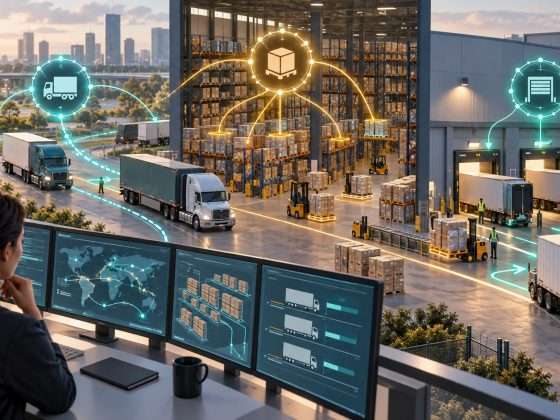
Specialized AI agents coordinating freight, inventory and warehouse operations across a luminous supply network
  • AI Agents

Multi-Agent AI Moves Supply Chains From Advice to Execution

  • September 21, 2026
View Post
Next Article
Abstract illustration of separate geometric units following independent paths into a map-like network
  • AI Agents

Researchers Observe Parallel AI Agents Querying Amap Without Evidence of a Swarm

  • October 5, 2026
View Post

Stay Ahead of AI

Get the AI developments that matter, delivered to your inbox.

More AI News
AI-generated conceptual illustration of an unbranded autonomous test sedan with a safety operator, not an actual Pony.ai vehicle or operating service
View Post
  • 3 min
  • Autonomous Vehicles

inDrive’s Kazakhstan Robotaxi Plan Begins With a Feasibility Test

  • October 23, 2026
AI-generated fictional gathering of women learning with laptops, not the real Aged Intelligence Society or its founders
View Post
  • 3 min
  • Work & Society

Aged Intelligence Society Makes AI Learning a Shared Exercise

  • October 23, 2026
AI-generated fictional clinician reviewing abstract diagnostic research materials, not a real patient or clinical trial
View Post
  • 3 min
  • Healthcare & Life Sciences

Microsoft’s New Diagnostic Results Face a Real-World Test

  • October 23, 2026
AI-generated conceptual brass key connecting separate cloud compartments, not an actual network diagram
View Post
  • 3 min
  • Cybersecurity

ConnectWise Incident Shows Why AI Attack Counts Need Context

  • October 23, 2026
AI-generated fictional office team reviewing abstract computer output, not actual Uber employees or premises
View Post
  • 3 min
  • Enterprise & Productivity

Uber Expands ChatGPT Work, With Outcomes Still to Be Measured

  • October 23, 2026
AI-generated conceptual collage of a record connected to blank devices, illustrating distribution through AI agents
View Post
  • 3 min
  • Business & Markets

Spotify Bets on AI Agents as a Distribution Channel

  • October 23, 2026
AI-generated conceptual server illustration showing an intrusion trail predating a protective update, not an actual affected system
View Post
  • 3 min
  • Cybersecurity

AWS Finds PHP Attack Attempts Before Public Disclosure

  • October 22, 2026
AI-generated fictional California technology-company boardroom and campus, not Meta's actual premises
View Post
  • 3 min
  • Big Tech Strategy

Meta Links Its Non-Voting Share Plan to Founder Leadership

  • October 22, 2026

Leave a Reply Cancel reply

Your email address will not be published. Required fields are marked *

Subscribe

Subscribe now to our newsletter

AI Updates
  • About
  • Newsletter
  • Contact
  • Privacy Policy
  • Terms of Use
Artificial Intelligence News

Input your search keywords and press Enter.

Go to mobile version







