
AI Updates
  • Latest News
  • Models & Research
    • AGI & Alignment
    • AI Agents
    • Foundation Models
    • Generative AI
    • Open Source AI
    • Research & Papers
    • Rankings & Benchmarks
  • Infrastructure
    • Chips & Semiconductors
    • Cloud & Networking
    • Data Centers & Neoclouds
    • Developer Platforms
    • Quantum Computing
  • Business
    • Big Tech Strategy
    • Mergers & Acquisitions
    • Public Markets
    • Startups & Funding
    • Talent & Leadership
    • Market Analysis
  • Applications
    • Consumer & Creative
    • Cybersecurity
    • Education & Media
    • Enterprise & Productivity
    • Finance & Legal
    • Healthcare & Life Sciences
    • Industry & Manufacturing
    • Science & Discovery
  • Robotics
    • Autonomous Vehicles
    • Drones & Defense
    • Edge AI & Embodied Intelligence
    • Robotics
  • Energy
    • Cooling & Water
    • Efficiency & Emissions
    • Electricity & Power Grids
    • Nuclear & Renewables
  • Policy & Society
    • AI Safety & Security
    • Copyright & Misinformation
    • Geopolitics
    • Privacy & Human Rights
    • Regulation & Government
    • Work & Society
Stay Ahead of AI

Get the AI developments that matter, delivered to your inbox.

Follow AI Updates
Facebook
Twitter
Instagram
  • Home
  • About
  • News
  • Contact
  • Newsletter
0
0
0
AI Updates AI Updates
AI Updates
  • Latest News
  • Models & Research
    • AGI & Alignment
    • AI Agents
    • Foundation Models
    • Generative AI
    • Open Source AI
    • Research & Papers
    • Rankings & Benchmarks
  • Infrastructure
    • Chips & Semiconductors
    • Cloud & Networking
    • Data Centers & Neoclouds
    • Developer Platforms
    • Quantum Computing
  • Business
    • Big Tech Strategy
    • Mergers & Acquisitions
    • Public Markets
    • Startups & Funding
    • Talent & Leadership
    • Market Analysis
  • Applications
    • Consumer & Creative
    • Cybersecurity
    • Education & Media
    • Enterprise & Productivity
    • Finance & Legal
    • Healthcare & Life Sciences
    • Industry & Manufacturing
    • Science & Discovery
  • Robotics
    • Autonomous Vehicles
    • Drones & Defense
    • Edge AI & Embodied Intelligence
    • Robotics
  • Energy
    • Cooling & Water
    • Efficiency & Emissions
    • Electricity & Power Grids
    • Nuclear & Renewables
  • Policy & Society
    • AI Safety & Security
    • Copyright & Misinformation
    • Geopolitics
    • Privacy & Human Rights
    • Regulation & Government
    • Work & Society
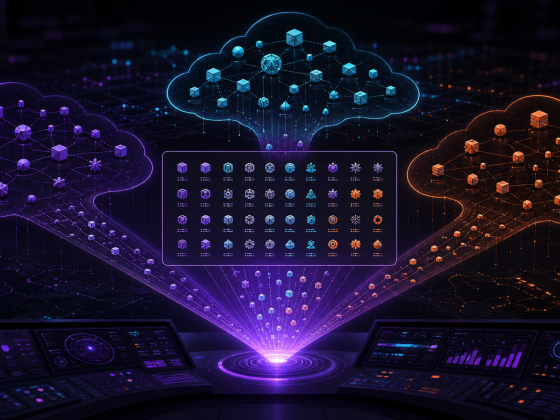
Business teams supervising several specialised AI assistants coordinated through one shared enterprise platform
  • AI Agents

The AI Intern Becomes a Platform and Governance Problem

  • January 8, 2026
  • No comments
Total
0
Shares
0
0
0
0

The next phase of enterprise AI may look less like one powerful assistant and more like a group of junior colleagues. Nexos.ai predicts that businesses will assign named, task-specific agents to HR, legal, finance, sales, operations, and customer support during 2026.

These “AI interns” are not general systems expected to understand the entire company. They screen CVs against recruitment criteria, flag contract deviations, prepare management reports, investigate routine security issues, or work inside a sales pipeline. Their usefulness comes from context and integration rather than raw model power.

Once several teams adopt them, however, the challenge shifts. An agent is easy to trial; a workforce of agents creates a platform, governance, cost, and ownership problem.

Specialisation Makes Agents More Useful and More Accountable

A defined role provides boundaries. A legal agent can compare language with an approved playbook, while a finance agent can reconcile a specific workflow. Users know what to ask, performance can be measured against an existing process, and the organisation can identify who owns the configuration.

Payhawk reports that a Nexos.ai deployment across finance, support, and operations reduced security-investigation time by 80 percent, achieved 98 percent data accuracy, and cut processing costs by 75 percent. These vendor-linked figures need contextual validation, but they show the type of operational measurement that role-specific deployments make possible.

Nexos argues that coordination creates the larger gain. Specialised agents can pass work through a shared workflow, turning isolated assistance into infrastructure. That benefit depends on explicit hand-offs; otherwise, one agent’s uncertain output becomes another agent’s trusted input.

Fragmentation Arrives After the First Successful Pilots

Teams may independently buy five or ten agents from different vendors. The result is duplicate subscriptions, inconsistent access controls, multiple logins, separate audit trails, and no common view of performance or data exposure.

Early adopters cited by Nexos found that consolidation on a shared enterprise platform could double deployment speed and improve oversight. A common layer allows approved models, prompts, connectors, identity policies, and monitoring to be reused.

Consolidation introduces its own concentration risk. If every department depends on one platform, an outage, price change, or security weakness affects the organisation broadly. Architecture should preserve exportable configurations, fallback processes, and a clear inventory of which workflows have become dependent on agents.

Business Teams Will Operate Agents Within Central Guardrails

Nexos expects ownership to move toward department leaders. Heads of HR, legal, finance, and sales will adjust instructions, test output, and scale configurations with limited engineering support. Agent management becomes an operational skill rather than a specialist experiment.

Central teams still need to provide identity, approved data access, evaluation standards, cost controls, incident response, and deployment policy. Local ownership decides whether an agent solves the right problem; shared governance prevents each team from recreating security and compliance independently.

Employees also need a clear way to challenge output. A named agent can appear more authoritative than it is, particularly when it participates in routine team channels. Interfaces should distinguish suggestions from completed actions and show when a person must review work before it affects a customer, employee, or financial record.

Demand may quickly exceed delivery capacity. Industry projections cited in the source suggest 40 percent of enterprise applications could incorporate task-specific agents by the end of 2026, up from under five percent in 2024. Building each one from scratch will not scale.

Libraries of approved agents, templates, and playbooks can turn successful work into repeatable capability. Reuse should include tests and known limitations, not just prompts. A copied agent needs an owner and review cycle in its new context.

The AI intern metaphor is useful because it implies defined work and supervision. It becomes dangerous if organisations remember the inexpensive labour but forget the management. A fleet of agents will create value only when every digital colleague has a role, permissions, measurable expectations, and someone responsible for its decisions.

Views: 75
Total
0
Shares
Share 0
Tweet 0
Pin it 0
Share 0
Topics
  • Agents
  • Enterprise
  • Governance
  • Nexos
  • Workflows
Previous Article
Marketing leaders overseeing several coordinated AI agents that optimise a complex advertising campaign within clear boundaries
  • AI Agents

PubMatic Brings Agentic AI Into the Advertising Control Plane

  • January 6, 2026
View Post
Next Article
A clean operations map showing diverse AI agents becoming visible within one governed enterprise network
  • AI Agents

Agent Sprawl Turns AI Discovery Into a CIO Priority

  • January 22, 2026
View Post

Stay Ahead of AI

Get the AI developments that matter, delivered to your inbox.

More AI News
AI-generated conceptual illustration of an unbranded autonomous test sedan with a safety operator, not an actual Pony.ai vehicle or operating service
View Post
  • 3 min
  • Autonomous Vehicles

inDrive’s Kazakhstan Robotaxi Plan Begins With a Feasibility Test

  • October 23, 2026
AI-generated fictional gathering of women learning with laptops, not the real Aged Intelligence Society or its founders
View Post
  • 3 min
  • Work & Society

Aged Intelligence Society Makes AI Learning a Shared Exercise

  • October 23, 2026
AI-generated fictional clinician reviewing abstract diagnostic research materials, not a real patient or clinical trial
View Post
  • 3 min
  • Healthcare & Life Sciences

Microsoft’s New Diagnostic Results Face a Real-World Test

  • October 23, 2026
AI-generated conceptual brass key connecting separate cloud compartments, not an actual network diagram
View Post
  • 3 min
  • Cybersecurity

ConnectWise Incident Shows Why AI Attack Counts Need Context

  • October 23, 2026
AI-generated fictional office team reviewing abstract computer output, not actual Uber employees or premises
View Post
  • 3 min
  • Enterprise & Productivity

Uber Expands ChatGPT Work, With Outcomes Still to Be Measured

  • October 23, 2026
AI-generated conceptual collage of a record connected to blank devices, illustrating distribution through AI agents
View Post
  • 3 min
  • Business & Markets

Spotify Bets on AI Agents as a Distribution Channel

  • October 23, 2026
AI-generated conceptual server illustration showing an intrusion trail predating a protective update, not an actual affected system
View Post
  • 3 min
  • Cybersecurity

AWS Finds PHP Attack Attempts Before Public Disclosure

  • October 22, 2026
AI-generated fictional California technology-company boardroom and campus, not Meta's actual premises
View Post
  • 3 min
  • Big Tech Strategy

Meta Links Its Non-Voting Share Plan to Founder Leadership

  • October 22, 2026

Leave a Reply Cancel reply

Your email address will not be published. Required fields are marked *

Subscribe

Subscribe now to our newsletter

AI Updates
  • About
  • Newsletter
  • Contact
  • Privacy Policy
  • Terms of Use
Artificial Intelligence News

Input your search keywords and press Enter.

Go to mobile version







