AI Updates
  • Latest News
  • Models & Research
    • AGI & Alignment
    • AI Agents
    • Foundation Models
    • Generative AI
    • Open Source AI
    • Research & Papers
    • Rankings & Benchmarks
  • Infrastructure
    • Chips & Semiconductors
    • Cloud & Networking
    • Data Centers & Neoclouds
    • Developer Platforms
    • Quantum Computing
  • Business
    • Big Tech Strategy
    • Mergers & Acquisitions
    • Public Markets
    • Startups & Funding
    • Talent & Leadership
    • Market Analysis
  • Applications
    • Consumer & Creative
    • Cybersecurity
    • Education & Media
    • Enterprise & Productivity
    • Finance & Legal
    • Healthcare & Life Sciences
    • Industry & Manufacturing
    • Science & Discovery
  • Robotics
    • Autonomous Vehicles
    • Drones & Defense
    • Edge AI & Embodied Intelligence
    • Robotics
  • Energy
    • Cooling & Water
    • Efficiency & Emissions
    • Electricity & Power Grids
    • Nuclear & Renewables
  • Policy & Society
    • AI Safety & Security
    • Copyright & Misinformation
    • Geopolitics
    • Privacy & Human Rights
    • Regulation & Government
    • Work & Society
Stay Ahead of AI

Get the AI developments that matter, delivered to your inbox.

Follow AI Updates
Facebook
Twitter
Instagram
  • Home
  • About
  • News
  • Contact
  • Newsletter
0
0
0
AI Updates AI Updates
AI Updates
  • Latest News
  • Models & Research
    • AGI & Alignment
    • AI Agents
    • Foundation Models
    • Generative AI
    • Open Source AI
    • Research & Papers
    • Rankings & Benchmarks
  • Infrastructure
    • Chips & Semiconductors
    • Cloud & Networking
    • Data Centers & Neoclouds
    • Developer Platforms
    • Quantum Computing
  • Business
    • Big Tech Strategy
    • Mergers & Acquisitions
    • Public Markets
    • Startups & Funding
    • Talent & Leadership
    • Market Analysis
  • Applications
    • Consumer & Creative
    • Cybersecurity
    • Education & Media
    • Enterprise & Productivity
    • Finance & Legal
    • Healthcare & Life Sciences
    • Industry & Manufacturing
    • Science & Discovery
  • Robotics
    • Autonomous Vehicles
    • Drones & Defense
    • Edge AI & Embodied Intelligence
    • Robotics
  • Energy
    • Cooling & Water
    • Efficiency & Emissions
    • Electricity & Power Grids
    • Nuclear & Renewables
  • Policy & Society
    • AI Safety & Security
    • Copyright & Misinformation
    • Geopolitics
    • Privacy & Human Rights
    • Regulation & Government
    • Work & Society
Table-tennis robot and running humanoid demonstrating physical AI through competitive sport
  • Robotics & Autonomy

Sony and Honor Push Physical AI Through Competitive Sport

  • April 23, 2026
  • No comments
Total
0
Shares
0
0
0
0

Physical AI is beginning to outperform skilled people in tightly defined real-world competitions. Sony AI’s autonomous table-tennis robot Ace has defeated high-level and professional players, while a humanoid named Lightning completed a Beijing half marathon faster than the recognised human world-best time.

The results are not direct measures of general intelligence. They are demanding tests of perception, control, endurance and simulation transfer—capabilities relevant far beyond sport.

Unlike chess or video games, these systems cannot rely on a perfectly represented digital environment. Balls spin unpredictably, motors heat, bodies lose balance and the physical world introduces delays that software must handle immediately.

Ace learns a fast sport through simulation

Ace competed under International Table Tennis Federation rules with licensed umpires. In matches documented in April 2025, it won three of five against elite players and lost twice to professional opponents. Sony AI says later matches included victories over professionals.

Nine synchronised cameras and three vision systems track the ball and its spin at speeds that would appear blurred to the human eye. Eight joints control the racket: three for position, two for orientation and three for force and speed.

Ace learned through self-training in simulation rather than imitating human demonstrations. That produced strategies and movement patterns opponents found difficult to read. Professional Mayuka Taira noted that the robot provides no emotional or bodily cues revealing which shots it dislikes.

The system remains imperfect. Elite player Rui Takenaka found it strong against complex spin but more predictable on simple serves. Sony’s team continues to improve adaptation during matches.

Beijing tests humanoid endurance at scale

More than 100 robots and roughly 12,000 people participated on separate tracks in the 2026 Beijing E-Town Humanoid Robot Half Marathon. Honor’s autonomous Lightning completed 21 kilometres in 50 minutes and 26 seconds, despite hitting a barricade.

That was faster than Jacob Kiplimo’s 57:20 performance in Lisbon, although different course conditions and separate competition rules make a direct athletic comparison misleading. Another Honor robot finished in 48 minutes under remote control, but the event prioritised autonomous navigation and recognised Lightning as winner.

The advance from the previous year is striking: the fastest robot then required two hours, 40 minutes and 42 seconds. Honor also placed second and third, suggesting progress in structural reliability, cooling and control rather than one isolated machine.

Long-distance racing stresses joints, energy systems and thermal management continuously. Those lessons can transfer to industrial robots expected to work long shifts rather than perform short demonstrations.

Sport exposes capabilities and failure modes

Table tennis tests millisecond perception and precision. Distance running tests endurance, navigation and recovery. Both create understandable benchmarks that reveal weaknesses more clearly than a controlled promotional video.

They also show why specialised success should not be confused with a general-purpose worker. Ace does not need to manipulate tools, understand a factory instruction or navigate around colleagues. Lightning’s collision demonstrates that speed and reliable environmental awareness do not automatically advance together.

Sony believes Ace’s perception and control techniques could support manufacturing and service robotics. Honor points to durable structures and liquid cooling for industrial use. Commercial transfer will require validation around safety, cost and different hardware.

Sports competitions are valuable because they push systems against people, rules and physical uncertainty. They provide repeatable goals while remaining less consequential than a factory or public-service deployment.

The achievements mark a transition in physical AI. Machines are no longer impressive only for completing a scripted motion; they are beginning to adapt, compete and recover in dynamic environments.

The wider impact will come when the same perception, cooling and control produce dependable everyday work. Sport makes the progress visible. Industry will decide whether it is useful.
Views: 142
Total
0
Shares
Share 0
Tweet 0
Pin it 0
Share 0
Topics
  • Honor
  • Humanoids
  • Robotics
  • Simulation
  • SonyAI
Previous Article
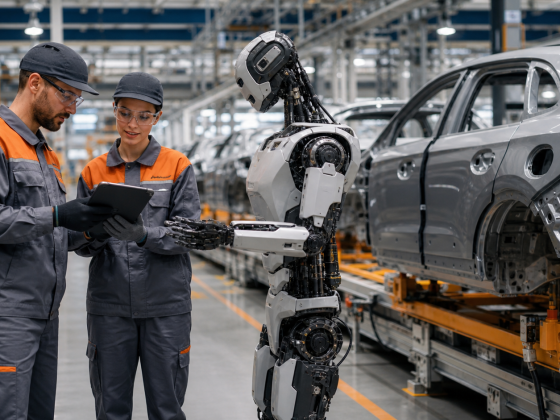
Hyundai-inspired automotive factory where people and humanoid robots work safely together
  • Robotics & Autonomy

Hyundai Builds Its Next Growth Phase Around Physical AI

  • April 14, 2026
View Post
Next Article
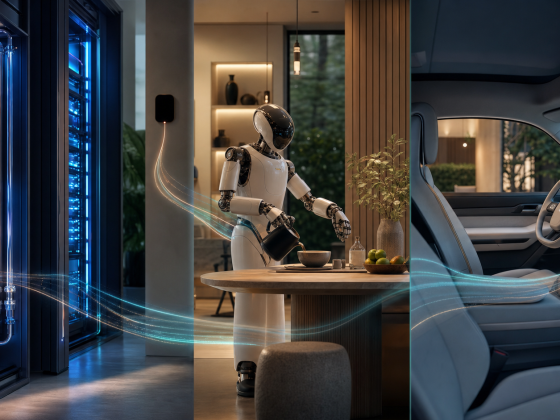
Home robot, vehicle system and cooled AI infrastructure connected through one physical AI stack
  • Robotics & Autonomy

LG and Nvidia Talks Expose Physical AI’s Hidden Dependencies

  • April 30, 2026
View Post

Stay Ahead of AI

Get the AI developments that matter, delivered to your inbox.

More AI News
AI-generated conceptual photograph of an engineer observing a processor and miniature room model, not an actual AMD facility, World Labs employee or named person
View Post
  • 3 min
  • Mergers & Acquisitions

AMD Completes World Labs Deal as Filing Confirms Closing Date and Share Count

  • November 17, 2026
AI-generated conceptual illustration of usage markers flowing from a blank terminal into a collection tray, not an actual Windows interface or diagnostic record
View Post
  • 3 min
  • Privacy & Human Rights

Windows Research Traces Coding-Tool Usage Into an Optional Diagnostic Queue

  • November 17, 2026
AI-generated editorial concept for California Seeks Court Remedies Over OpenAI's Experimental Agent Safeguards, not a depiction of an actual person, facility, product interface or legal finding
View Post
  • 3 min
  • Regulation & Government

California Seeks Court Remedies Over OpenAI’s Experimental Agent Safeguards

  • November 17, 2026
AI-generated editorial concept for TensorWave's OpenAI Deal Separates Dedicated Capacity From Delivered Compute, not a depiction of an actual person, facility, product interface or legal finding
View Post
  • 3 min
  • Data Centers & Neoclouds

TensorWave’s OpenAI Deal Separates Dedicated Capacity From Delivered Compute

  • November 17, 2026
AI-generated editorial concept for Harvard's Data-Center Study Puts Accounting Choices Behind the Power Debate, not a depiction of an actual person, facility, product interface or legal finding
View Post
  • 3 min
  • Efficiency & Emissions

Harvard’s Data-Center Study Puts Accounting Choices Behind the Power Debate

  • November 17, 2026
AI-generated editorial concept for Google Documents an Automated Patch-to-Exploit Pipeline in the Wild, not a depiction of an actual person, facility, product interface or legal finding
View Post
  • 3 min
  • Cybersecurity

Google Documents an Automated Patch-to-Exploit Pipeline in the Wild

  • November 17, 2026
AI-generated editorial concept for Corma Raises $125 Million as Defensive AI Claims Face an Evidence Test, not a depiction of an actual person, facility, product interface or legal finding
View Post
  • 3 min
  • Startups & Funding

Corma Raises $125 Million as Defensive AI Claims Face an Evidence Test

  • November 17, 2026
AI-generated editorial concept for Childlight's AI Abuse Reporting Surge Requires Careful Counting, not a depiction of an actual person, facility, product interface or legal finding
View Post
  • 3 min
  • AI Safety & Security

Childlight’s AI Abuse Reporting Surge Requires Careful Counting

  • November 17, 2026

Leave a Reply Cancel reply

Your email address will not be published. Required fields are marked *

Subscribe

Subscribe now to our newsletter

AI Updates
  • About
  • Newsletter
  • Contact
  • Privacy Policy
  • Terms of Use
Artificial Intelligence News

Input your search keywords and press Enter.

Go to mobile version