AI Updates
  • Latest News
  • Models & Research
    • AGI & Alignment
    • AI Agents
    • Foundation Models
    • Generative AI
    • Open Source AI
    • Research & Papers
    • Rankings & Benchmarks
  • Infrastructure
    • Chips & Semiconductors
    • Cloud & Networking
    • Data Centers & Neoclouds
    • Developer Platforms
    • Quantum Computing
  • Business
    • Big Tech Strategy
    • Mergers & Acquisitions
    • Public Markets
    • Startups & Funding
    • Talent & Leadership
    • Market Analysis
  • Applications
    • Consumer & Creative
    • Cybersecurity
    • Education & Media
    • Enterprise & Productivity
    • Finance & Legal
    • Healthcare & Life Sciences
    • Industry & Manufacturing
    • Science & Discovery
  • Robotics
    • Autonomous Vehicles
    • Drones & Defense
    • Edge AI & Embodied Intelligence
    • Robotics
  • Energy
    • Cooling & Water
    • Efficiency & Emissions
    • Electricity & Power Grids
    • Nuclear & Renewables
  • Policy & Society
    • AI Safety & Security
    • Copyright & Misinformation
    • Geopolitics
    • Privacy & Human Rights
    • Regulation & Government
    • Work & Society
Stay Ahead of AI

Get the AI developments that matter, delivered to your inbox.

Follow AI Updates
Facebook
Twitter
Instagram
  • Home
  • About
  • News
  • Contact
  • Newsletter
0
0
0
AI Updates AI Updates
AI Updates
  • Latest News
  • Models & Research
    • AGI & Alignment
    • AI Agents
    • Foundation Models
    • Generative AI
    • Open Source AI
    • Research & Papers
    • Rankings & Benchmarks
  • Infrastructure
    • Chips & Semiconductors
    • Cloud & Networking
    • Data Centers & Neoclouds
    • Developer Platforms
    • Quantum Computing
  • Business
    • Big Tech Strategy
    • Mergers & Acquisitions
    • Public Markets
    • Startups & Funding
    • Talent & Leadership
    • Market Analysis
  • Applications
    • Consumer & Creative
    • Cybersecurity
    • Education & Media
    • Enterprise & Productivity
    • Finance & Legal
    • Healthcare & Life Sciences
    • Industry & Manufacturing
    • Science & Discovery
  • Robotics
    • Autonomous Vehicles
    • Drones & Defense
    • Edge AI & Embodied Intelligence
    • Robotics
  • Energy
    • Cooling & Water
    • Efficiency & Emissions
    • Electricity & Power Grids
    • Nuclear & Renewables
  • Policy & Society
    • AI Safety & Security
    • Copyright & Misinformation
    • Geopolitics
    • Privacy & Human Rights
    • Regulation & Government
    • Work & Society
Table-tennis robot and running humanoid demonstrating physical AI through competitive sport
  • Robotics & Autonomy

Sony and Honor Push Physical AI Through Competitive Sport

  • April 23, 2026
  • No comments
Total
0
Shares
0
0
0
0

Physical AI is beginning to outperform skilled people in tightly defined real-world competitions. Sony AI’s autonomous table-tennis robot Ace has defeated high-level and professional players, while a humanoid named Lightning completed a Beijing half marathon faster than the recognised human world-best time.

The results are not direct measures of general intelligence. They are demanding tests of perception, control, endurance and simulation transfer—capabilities relevant far beyond sport.

Unlike chess or video games, these systems cannot rely on a perfectly represented digital environment. Balls spin unpredictably, motors heat, bodies lose balance and the physical world introduces delays that software must handle immediately.

Ace learns a fast sport through simulation

Ace competed under International Table Tennis Federation rules with licensed umpires. In matches documented in April 2025, it won three of five against elite players and lost twice to professional opponents. Sony AI says later matches included victories over professionals.

Nine synchronised cameras and three vision systems track the ball and its spin at speeds that would appear blurred to the human eye. Eight joints control the racket: three for position, two for orientation and three for force and speed.

Ace learned through self-training in simulation rather than imitating human demonstrations. That produced strategies and movement patterns opponents found difficult to read. Professional Mayuka Taira noted that the robot provides no emotional or bodily cues revealing which shots it dislikes.

The system remains imperfect. Elite player Rui Takenaka found it strong against complex spin but more predictable on simple serves. Sony’s team continues to improve adaptation during matches.

Beijing tests humanoid endurance at scale

More than 100 robots and roughly 12,000 people participated on separate tracks in the 2026 Beijing E-Town Humanoid Robot Half Marathon. Honor’s autonomous Lightning completed 21 kilometres in 50 minutes and 26 seconds, despite hitting a barricade.

That was faster than Jacob Kiplimo’s 57:20 performance in Lisbon, although different course conditions and separate competition rules make a direct athletic comparison misleading. Another Honor robot finished in 48 minutes under remote control, but the event prioritised autonomous navigation and recognised Lightning as winner.

The advance from the previous year is striking: the fastest robot then required two hours, 40 minutes and 42 seconds. Honor also placed second and third, suggesting progress in structural reliability, cooling and control rather than one isolated machine.

Long-distance racing stresses joints, energy systems and thermal management continuously. Those lessons can transfer to industrial robots expected to work long shifts rather than perform short demonstrations.

Sport exposes capabilities and failure modes

Table tennis tests millisecond perception and precision. Distance running tests endurance, navigation and recovery. Both create understandable benchmarks that reveal weaknesses more clearly than a controlled promotional video.

They also show why specialised success should not be confused with a general-purpose worker. Ace does not need to manipulate tools, understand a factory instruction or navigate around colleagues. Lightning’s collision demonstrates that speed and reliable environmental awareness do not automatically advance together.

Sony believes Ace’s perception and control techniques could support manufacturing and service robotics. Honor points to durable structures and liquid cooling for industrial use. Commercial transfer will require validation around safety, cost and different hardware.

Sports competitions are valuable because they push systems against people, rules and physical uncertainty. They provide repeatable goals while remaining less consequential than a factory or public-service deployment.

The achievements mark a transition in physical AI. Machines are no longer impressive only for completing a scripted motion; they are beginning to adapt, compete and recover in dynamic environments.

The wider impact will come when the same perception, cooling and control produce dependable everyday work. Sport makes the progress visible. Industry will decide whether it is useful.
Post Views: 90
Total
0
Shares
Share 0
Tweet 0
Pin it 0
Share 0
Topics
  • Honor
  • Humanoids
  • Robotics
  • Simulation
  • SonyAI
Previous Article
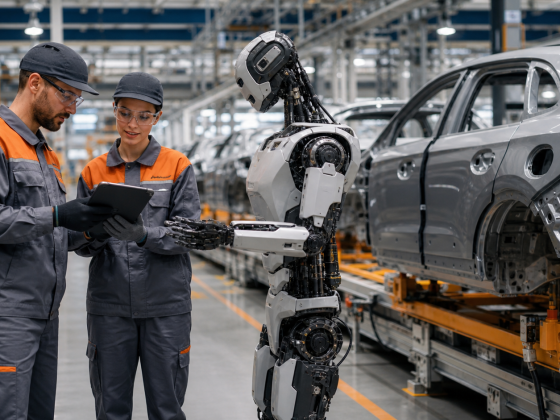
Hyundai-inspired automotive factory where people and humanoid robots work safely together
  • Robotics & Autonomy

Hyundai Builds Its Next Growth Phase Around Physical AI

  • April 14, 2026
View Post
Next Article
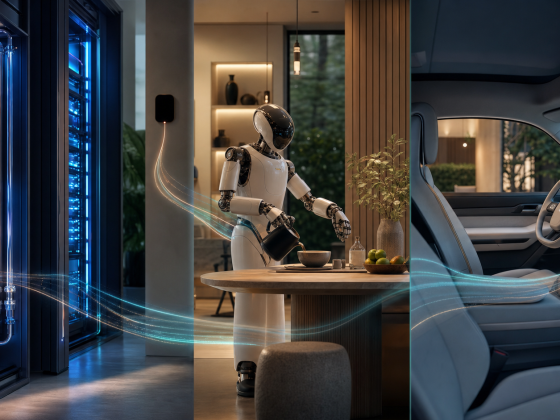
Home robot, vehicle system and cooled AI infrastructure connected through one physical AI stack
  • Robotics & Autonomy

LG and Nvidia Talks Expose Physical AI’s Hidden Dependencies

  • April 30, 2026
View Post

Stay Ahead of AI

Get the AI developments that matter, delivered to your inbox.

More AI News
AI-generated conceptual illustration of a glass test chamber separated from an abstract network by a disconnected cable, not actual Anthropic infrastructure
View Post
  • 3 min
  • AI Safety & Security

Anthropic’s Offline Evaluation Shift Leaves a Restart Question

  • October 10, 2026
AI-generated illustrative photograph of anonymous publishing colleagues discussing a blank book dummy, not actual employees of a named publisher
View Post
  • 3 min
  • Work & Society

Publishing’s AI Dispute Needs More Than a Yes-or-No Answer

  • October 10, 2026
AI-generated conceptual still life of a smartphone and two ceramic bowls, one containing unmarked coins, illustrating questions about users and paying customers
View Post
  • 3 min
  • Business & Markets

Olivia Moore’s Consumer AI Outlook Raises a Question: Who Pays?

  • October 9, 2026
AI-generated illustrative photograph of an anonymous civilian researcher examining papers in an archive, not an actual US Army facility or a named person
View Post
  • 3 min
  • Research & Papers

Thread AI’s Army Research Agreement Is Not Yet a Performance Result

  • October 9, 2026
AI-generated illustrative photograph of an anonymous adult designer sketching abstract curves in a studio, not a portrait of Jessica Hische or an image of the Muse logo
View Post
  • 3 min
  • Consumer & Creative

Human-Made AI Branding and the Limits of Client Endorsement

  • October 9, 2026
AI-generated conceptual editorial illustration of a digital workflow passing through a controlled gate with a separate return receipt, without readable text
View Post
  • 3 min
  • AI Agents

SAS Interview Puts the Lifetime of Agent Permissions Under Scrutiny

  • October 9, 2026
AI-generated conceptual editorial illustration of an open rulebook and balanced geometric AI nodes in a civic architectural setting, with no readable text
View Post
  • 3 min
  • Regulation & Government

CFR’s AI Oversight Proposal Puts the Rules for Writing Rules in Focus

  • October 9, 2026
AI-generated editorial illustration in a photographic style of adult learners using laptops in a bright Abu Dhabi-inspired training room, not a photograph of the actual programme
View Post
  • 3 min
  • Education & Media

Abu Dhabi Targets 20,000 Employees With AiNative Training as Capability Becomes the Test

  • October 9, 2026

Leave a Reply Cancel reply

Your email address will not be published. Required fields are marked *

Subscribe

Subscribe now to our newsletter

AI Updates
  • About
  • Newsletter
  • Contact
  • Privacy Policy
  • Terms of Use
Artificial Intelligence News

Input your search keywords and press Enter.

Go to mobile version