

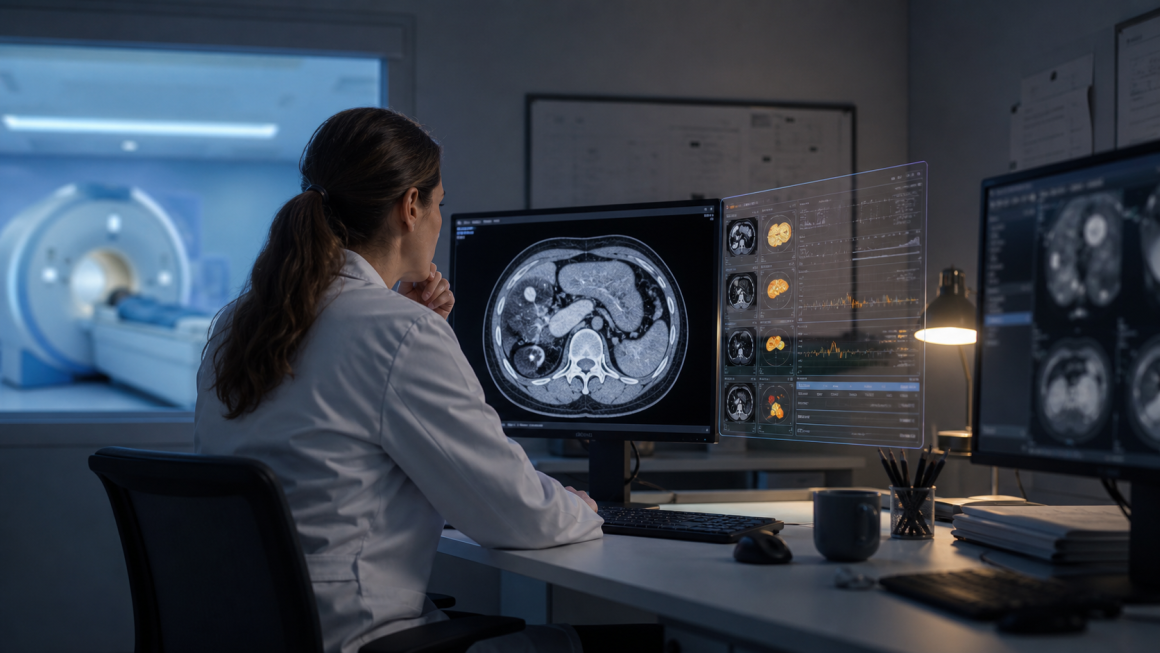
OpenAI, Google, and Anthropic introduced specialised healthcare capabilities within days of one another in January 2026. The releases make medical records, imaging, coding, coverage data, and administrative workflows more accessible to advanced models.
None is cleared as a medical device or approved to diagnose patients directly. Each company emphasises that its system supports developers, consumers, or institutions rather than replacing clinical judgement.
That shared disclaimer defines the real state of medical AI. Technical capability is advancing quickly, while clinical validation, liability, regulation, and workflow integration determine how much of it can safely reach care.
Three Products Take Different Routes Into Healthcare
ChatGPT Health lets US users connect records through b.well alongside Apple Health, Function, and MyFitnessPal. It is a consumer service offered through a waitlist outside the EEA, Switzerland, and the UK, and OpenAI explicitly says it is not intended for diagnosis or treatment.
Google’s open MedGemma 1.5 model can analyse three-dimensional CT and MRI scans and whole-slide pathology images. Developers may download it through Hugging Face or deploy it on Vertex AI, but Google describes it as a starting point that organisations must evaluate and adapt.
Claude for Healthcare targets enterprise workflows. HIPAA-compliant connectors reach CMS coverage information, ICD-10 codes, and provider registries. Anthropic likewise says output should not directly determine diagnosis, patient management, or treatment.
The three routes create different accountability chains. A consumer interpreting personal records, a developer adapting an open model, and a hospital connecting an enterprise assistant do not face the same evidence requirements. Product labels should make those boundaries difficult to mistake.
Benchmarks Do Not Measure Patient Outcomes
Google reports 92.3 percent accuracy for MedGemma 1.5 on Stanford’s MedAgentBench, with improvements in MRI disease classification and CT findings. Anthropic reports the same MedAgentBench score for Claude Opus 4.5 and 61.3 percent on MedCalc when Python execution is enabled.
These numbers compare performance on curated tasks. They do not establish how a tool behaves across hospitals, imaging equipment, rare conditions, incomplete records, or populations poorly represented in development data.
Medical errors are asymmetric. A seemingly high average can conceal a dangerous failure rate for an uncommon but urgent condition. Clinical evaluation must measure outcomes, error severity, consistency, and how professionals respond to uncertain recommendations—not merely whether a benchmark answer matches.
Comparisons also need a meaningful baseline. A tool may outperform another model while remaining less reliable than the clinical process it is intended to support. Hospitals should test it against current practice, including the time and new errors introduced when clinicians review automated output.
Administrative Work Is the First Production Beachhead
Current deployments concentrate where errors are less immediately clinical. Novo Nordisk uses Claude for document automation in pharmaceutical development, while Taiwan’s National Health Insurance Administration applied MedGemma to extract information from 30,000 pathology reports for policy analysis.
Prior authorisation, claims, coding, documentation, and protocol drafting are attractive because they consume skilled time and provide opportunities for human review. Even here, mistakes can delay care or misallocate coverage, so audit trails and escalation remain necessary.
These workflows can produce the operational evidence needed for later expansion. Institutions learn how staff use suggestions, which interfaces cause overreliance, and how monitoring works at scale before allowing the technology closer to irreversible clinical decisions.
Regulatory pathways depend on intended use. Software recommending prevention, diagnosis, or treatment to clinicians may require FDA premarket review, while jurisdictions apply different standards. Liability remains unsettled when a clinician relies on automated analysis and a patient is harmed.
The competitive releases show that sophisticated medical reasoning is becoming widely available. They do not show that healthcare institutions can safely deploy it at the same speed.
The next milestone is not another model score. It is evidence that a defined tool improves a defined workflow for real patients, with accountable professionals, monitored limitations, and regulatory approval proportionate to the decision it influences.