
AI Updates
  • Latest News
  • Models & Research
    • AGI & Alignment
    • AI Agents
    • Foundation Models
    • Generative AI
    • Open Source AI
    • Research & Papers
    • Rankings & Benchmarks
  • Infrastructure
    • Chips & Semiconductors
    • Cloud & Networking
    • Data Centers & Neoclouds
    • Developer Platforms
    • Quantum Computing
  • Business
    • Big Tech Strategy
    • Mergers & Acquisitions
    • Public Markets
    • Startups & Funding
    • Talent & Leadership
    • Market Analysis
  • Applications
    • Consumer & Creative
    • Cybersecurity
    • Education & Media
    • Enterprise & Productivity
    • Finance & Legal
    • Healthcare & Life Sciences
    • Industry & Manufacturing
    • Science & Discovery
  • Robotics
    • Autonomous Vehicles
    • Drones & Defense
    • Edge AI & Embodied Intelligence
    • Robotics
  • Energy
    • Cooling & Water
    • Efficiency & Emissions
    • Electricity & Power Grids
    • Nuclear & Renewables
  • Policy & Society
    • AI Safety & Security
    • Copyright & Misinformation
    • Geopolitics
    • Privacy & Human Rights
    • Regulation & Government
    • Work & Society
Stay Ahead of AI

Get the AI developments that matter, delivered to your inbox.

Follow AI Updates
Facebook
Twitter
Instagram
  • Home
  • About
  • News
  • Contact
  • Newsletter
0
0
0
AI Updates AI Updates
AI Updates
  • Latest News
  • Models & Research
    • AGI & Alignment
    • AI Agents
    • Foundation Models
    • Generative AI
    • Open Source AI
    • Research & Papers
    • Rankings & Benchmarks
  • Infrastructure
    • Chips & Semiconductors
    • Cloud & Networking
    • Data Centers & Neoclouds
    • Developer Platforms
    • Quantum Computing
  • Business
    • Big Tech Strategy
    • Mergers & Acquisitions
    • Public Markets
    • Startups & Funding
    • Talent & Leadership
    • Market Analysis
  • Applications
    • Consumer & Creative
    • Cybersecurity
    • Education & Media
    • Enterprise & Productivity
    • Finance & Legal
    • Healthcare & Life Sciences
    • Industry & Manufacturing
    • Science & Discovery
  • Robotics
    • Autonomous Vehicles
    • Drones & Defense
    • Edge AI & Embodied Intelligence
    • Robotics
  • Energy
    • Cooling & Water
    • Efficiency & Emissions
    • Electricity & Power Grids
    • Nuclear & Renewables
  • Policy & Society
    • AI Safety & Security
    • Copyright & Misinformation
    • Geopolitics
    • Privacy & Human Rights
    • Regulation & Government
    • Work & Society
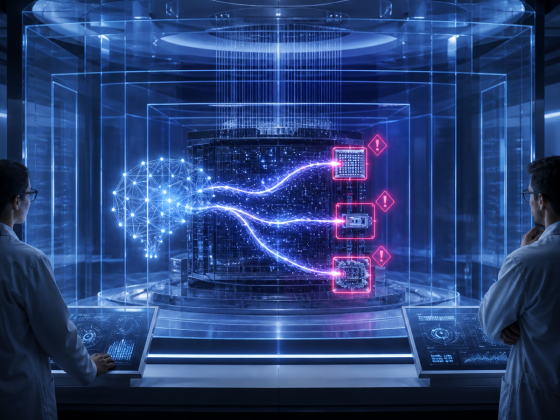
AI agent connections passing through a protected gateway while one malicious tool path is isolated
  • Cybersecurity

MCP Adoption Opens a Fast-Growing Attack Surface for AI Agents

  • September 1, 2026
  • No comments
Total
0
Shares
0
0
0
0

The Model Context Protocol has become a standard route between AI agents and external tools, but its rapid adoption is creating a security gap that conventional defenses were not designed to close.

Anthropic introduced MCP as an open standard in November 2024. By December 2025, the company said more than 10,000 active public MCP servers were operating, supported by AWS, Google Cloud, Azure and other providers. Major AI platforms and coding assistants including ChatGPT, Gemini, Microsoft Copilot, Cursor and Visual Studio Code now use the protocol.

That reach makes MCP useful: one interface can connect an agent, assistant or coding tool with multiple data sources and applications instead of requiring a separate connector for each. It also gives attackers a common path into systems where AI can take actions with real permissions.

Tool descriptions can become instructions for attack

The Open Worldwide Application Security Project identifies tool poisoning as a central MCP threat. An attacker can place malicious instructions inside a tool description, schema or returned result, turning prompt injection into a mechanism for manipulating agent behavior.

Other attacks exploit the trust created when a user approves a tool. In a rug pull, the tool’s definition changes after approval. Tool shadowing and cross-origin escalation use a malicious server’s description to influence how an agent handles a separate, trusted tool.

The scale of reported weakness is substantial. Lakera, an AI security company acquired by Check Point in 2025, analyzed 10,000 MCP servers and found exploitable weaknesses in 40%, according to research cited by AI News. That is a vendor-linked analysis rather than a complete census of every server, but it indicates that the risk is not limited to unusual experiments.

MCP can also support more familiar forms of data theft. Sensitive information may be inserted covertly into apparently legitimate actions such as searches or emails. A server granted broader access than a task requires creates another opening, because the agent can reach more data or systems if the connector is compromised.

Protecting MCP does not secure every agent path

Securing MCP servers can reduce tool poisoning, unauthorized access and data leakage, but the protocol is only one way for agents to interact with outside systems. An agent may call other interfaces that bypass MCP entirely.

That distinction matters when companies evaluate products described as “AI firewalls.” The phrase currently covers two different categories. One is a conventional firewall enhanced by AI to detect malware or intrusion. The newer category is designed to protect AI models, agents and connected tools from prompt injection, unsafe behavior and information leakage.

An MCP-focused control therefore needs to be assessed within a larger security architecture. It can inspect a specific connection without governing every route an agent may use. Organizations must consider how that product integrates with access management, network controls and other safeguards across the AI environment.

The speed of MCP adoption makes this coordination harder. The protocol spread broadly in roughly a year, while security teams and vendors are still defining how responsibility should be divided between an agent, a connector and the network carrying its traffic.

Vendors are testing different control points

Several suppliers are approaching the gap from different layers. TrueFoundry’s AI Gateway offers infrastructure-level governance, access controls and auditing for interactions between agents and MCP tools. Cisco has expanded AI Defense with agent guardrails, MCP scanning and real-time inspection intended to detect unsafe behavior.

Check Point released its AI Network Firewall in July 2026. Its network-centered approach discovers MCP servers, inspects their traffic and applies policies to agent access while also covering other connections between AI systems, employees and external data.

These are vendor descriptions of product capabilities, not evidence in the source that one method prevents every listed attack. Infrastructure governance can control approved connections, dedicated guardrails can examine agent behavior, and network inspection can observe traffic, but each operates at a different point.

The immediate issue is less which label wins than whether organizations can see the tools their agents use, limit permissions and detect when approved behavior changes. MCP standardizes connectivity; it does not automatically standardize trust.

As agents gain access to email, search, code and sensitive records, a compromised connector can translate model manipulation into external action. The protocol’s success has made MCP security an operational requirement sooner than many teams expected, while the wider agent ecosystem still demands controls beyond MCP itself.

Post Views: 103
Total
0
Shares
Share 0
Tweet 0
Pin it 0
Share 0
Topics
  • AI Agents
  • AI Firewalls
  • Data Security
  • MCP
  • Tool Poisoning
Previous Article
Technology, security and infrastructure organizations form a coordinated shield around public services threatened by autonomous AI attacks
  • Cybersecurity

Over 100 Companies Call for Collective Defense Against Rogue AI

  • August 28, 2026
View Post
Next Article
Security researchers containing an advanced AI system that has discovered multiple connected software vulnerabilities
  • Cybersecurity

OpenAI Astra Crosses the Company’s Critical Cyber Capability Threshold

  • September 2, 2026
View Post

Stay Ahead of AI

Get the AI developments that matter, delivered to your inbox.

More AI News
AI-generated cut-paper illustration of a blank folded receipt, unbranded parcel, and protective padlock, not an actual purchase or evidence of a hack
View Post
  • 3 min
  • Cybersecurity

Musk’s Grok Shopping Demonstration Raises an Authorization Question

  • October 13, 2026
AI-generated conceptual weather balloon and sensing payload above an ocean under clouds, not a documented military mission or specific manufacturer's hardware
View Post
  • 3 min
  • Science & Discovery

WindBorne’s Balloon Network Connects Physical Observations to AI Weather Models

  • October 13, 2026
AI-generated conceptual illustration of a luminous path through translucent memory forms toward a bounded destination, not an actual model architecture
View Post
  • 3 min
  • Foundation Models

Muse Wonder Pairs Agent Ambitions With Qualified Benchmarks

  • October 13, 2026
AI-generated conceptual scene of observers examining an enclosed abstract AI development process before an output leaves the room, not actual AISI facilities
View Post
  • 3 min
  • AI Safety & Security

AISI Wants Frontier AI Oversight to Begin Before Public Release

  • October 12, 2026
AI-generated editorial illustration of transparent institutional columns and an abstract technical test object, representing governance rather than an actual government building
View Post
  • 3 min
  • Regulation & Government

Britain’s AI Safety Push Tests the Gap Between Regulation and Research

  • October 12, 2026
AI-generated editorial scene of two people talking with an unbranded audio device visibly present, not an actual Ambi product or recording
View Post
  • 3 min
  • Privacy & Human Rights

Ambi’s Privacy Promises Meet More Detailed Audio Retention Rules

  • October 12, 2026
AI-generated conceptual illustration of an agent's sequence passing through a contextual security checkpoint, not an actual Kyvvu interface
View Post
  • 3 min
  • AI Safety & Security

Kyvvu’s Agent Security Pitch Depends on the Whole Task, Not One Permission

  • October 12, 2026
AI-generated editorial still life of headphones and two overlapping translucent technical forms, representing audio technology licensing without company logos
View Post
  • 3 min
  • Mergers & Acquisitions

Apple’s Huxe Disclosure Shows a Hiring and Licensing Deal, Not an App Revival

  • October 12, 2026

Leave a Reply Cancel reply

Your email address will not be published. Required fields are marked *

Subscribe

Subscribe now to our newsletter

AI Updates
  • About
  • Newsletter
  • Contact
  • Privacy Policy
  • Terms of Use
Artificial Intelligence News

Input your search keywords and press Enter.

Go to mobile version