

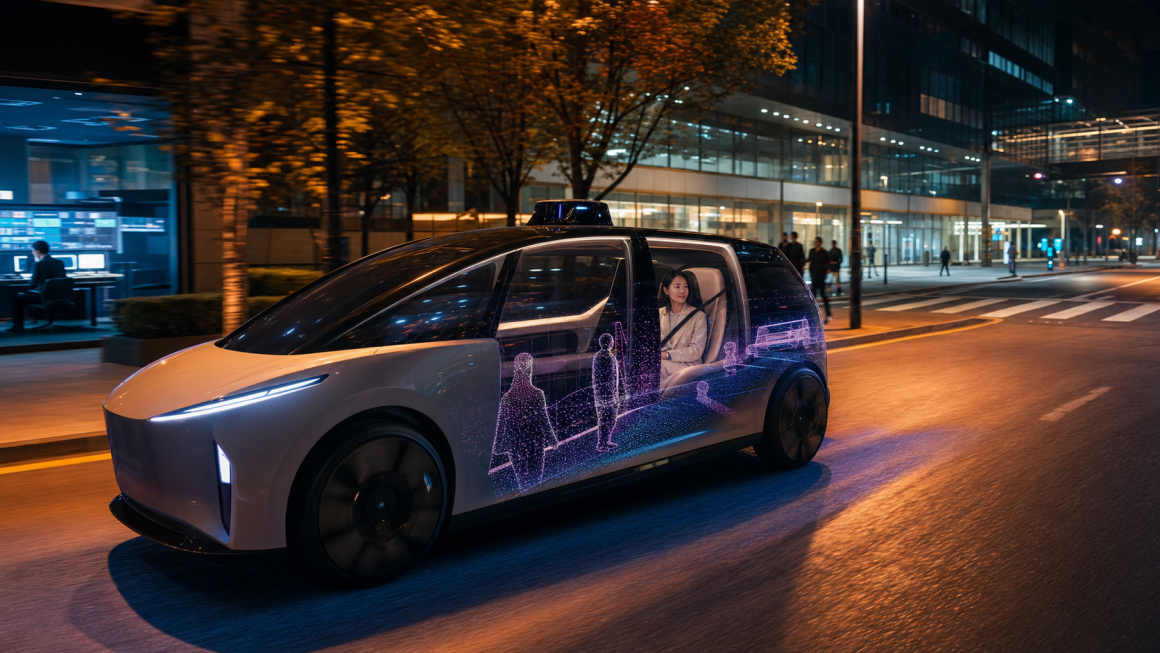
Kakao Mobility is developing Level 4 autonomous-driving technology in-house as part of a broader physical AI strategy for South Korea. The roadmap combines machine-learning models, redundant vehicle systems and a validation platform built on simulation and real-world driving data.
Level 4 vehicles can drive without passenger monitoring inside defined service areas. That makes deployment less a universal self-driving promise and more an integrated service involving vehicles, maps, control centres and emergency response.
Kakao’s advantage is its existing mobility platform. Autonomous rides can be offered through Kakao T alongside familiar taxi and navigation services, connecting the technology to demand and fleet operations.
Level 4 requires intelligence and graceful failure
Kakao is building models for perception, decision-making and control. The vehicle must understand its surroundings, choose an action and execute it without expecting a passenger to take over.
Redundant architecture keeps essential functions available when a component fails. Braking, steering, sensing and computing need backup paths appropriate to the operating domain.
The validation platform combines virtual simulation with real driving data. Simulation can expose systems to rare or dangerous situations repeatedly, while road experience reveals conditions the virtual environment failed to represent.
Safety evidence depends on both. Distance driven alone says little if testing avoids difficult scenarios; simulation alone cannot prove that sensors and hardware behave as modelled.
Passengers and operators need shared visibility
Kakao’s Autonomous Vehicle Visualizer is a three-dimensional display of what the vehicle detects. Showing the driving context can help passengers understand why it slows, waits or changes path.
The company also plans a 24-hour control centre and anomaly detection using vision-language models. Remote operators could assess unusual situations and coordinate emergency response without implying that they continuously drive every vehicle.
Anomaly detection must be carefully evaluated. A model may describe a scene fluently while overlooking a critical object or misinterpreting context. Clear escalation criteria and reliable sensor feeds matter more than a persuasive explanation.
Kakao intends to share selected datasets, high-definition maps, ride-hailing APIs, fleet systems and on-site response resources with startups and manufacturers. An open domestic ecosystem could reduce duplicate infrastructure and strengthen local competition.
Gangnam provides an operational foundation
Seoul’s late-night autonomous taxi service in Gangnam recorded 7,754 rides between its September 2024 launch and February 2026. The city reported no accidents attributed to autonomous technology during that period, with roughly 24 trips per operating day.
The service moved from a free pilot to paid operation in April 2026, and the active fleet expanded from three vehicles to seven, with two additional reserves. Users can request a ride through an autonomous-car option or the standard Kakao T taxi menu.
The record is encouraging but still limited. A small, late-night fleet in one district does not establish performance across every Korean road or weather condition. It does provide valuable service data, passenger feedback and incident procedures.
Kakao’s roadmap recognises that Level 4 autonomy is a system rather than a model. Vehicles need redundancy, validation, real-time oversight, maps and a reliable way to reach customers.
The open-ecosystem plan could make those capabilities available to companies unable to build the full stack. It also requires clear standards for data quality, liability and updates so every participant does not interpret safety differently.
Physical AI reaches the public when technology, operations and trust work together. Kakao Mobility already controls a popular service interface and has real rides underway. Its next challenge is proving that the same integrated model can expand beyond a bounded pilot while preserving the visibility and response mechanisms that make passengers comfortable giving up control. Expansion should proceed district by district, with transparent safety evidence and clearly defined operating conditions for every new service area.