OpenAI’s first DevDay introduced GPT-4 Turbo alongside a collection of platform changes aimed at developers. The preview model offered a 128,000-token context window, more recent knowledge and lower token prices, while new APIs extended the platform into assistants, vision, image generation and speech.
The announcement changed more than a benchmark. Longer context and reduced cost altered which applications could be economically attempted, while the Assistants API lowered some of the engineering effort required to build persistent, tool-using experiences. Developers gained a broader design space and a new set of dependencies to evaluate.
Longer Context Expands the Usable Input
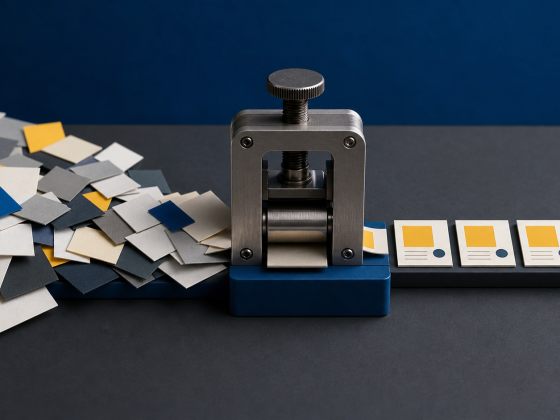
GPT-4 Turbo’s 128K context window was described as enough to process more than 300 pages of text in one prompt. That capacity makes it possible to provide a model with long reports, extensive documentation or a larger portion of a codebase without dividing the material into as many separate calls. It can simplify prototypes that depend on relationships across distant passages.
A large window does not mean every included fact will receive equal attention or be interpreted correctly. Developers still need retrieval and document-selection strategies to keep input relevant. Supplying hundreds of pages can increase latency and cost while making it harder to identify the evidence behind an answer. Context capacity is a ceiling, not a requirement to fill every request.
Evaluation should reflect the intended document length and structure. A model may perform well when a decisive fact appears near the beginning but miss it among repeated or conflicting passages. Applications need tests for citation, omission and contradictory sources, especially when users may assume that anything uploaded has been fully understood.
Lower Prices Change Product Economics
OpenAI priced GPT-4 Turbo input at $0.01 and output at $0.03 per thousand tokens, described as three times cheaper for input and twice as cheap for output than the prior GPT-4 pricing. Similar reductions reached GPT-3.5 Turbo. Lower unit cost can turn a feature that was too expensive at scale into a plausible part of a commercial product.
Token price is only one part of total cost. Long context encourages larger inputs, and agent-like systems may call the model several times before producing one visible result. Storage, retrieval, monitoring, human review and retries also contribute. Developers should model the cost of a completed user task rather than focus only on the price of a single request.
Reduced prices can also encourage wider experimentation. Teams can compare prompts, run larger evaluation sets and reserve more capable models for difficult cases. A routing strategy may use a cheaper model for routine work and escalate when confidence or complexity demands it. That flexibility is valuable if quality thresholds remain explicit.
The Platform Moves Toward Multimodal Assistants
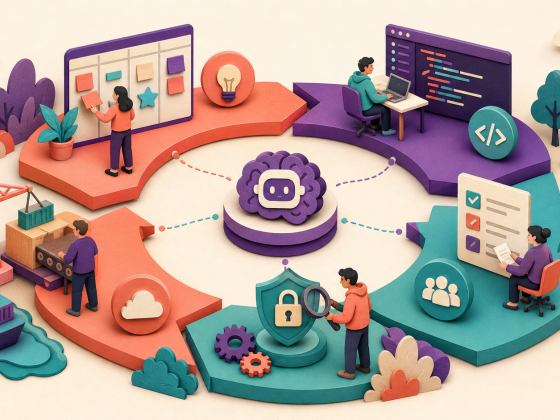
The Assistants API was designed to help developers create purpose-built AI experiences with instructions, additional knowledge, models and tools. OpenAI also added vision to GPT-4 Turbo, DALL·E 3 image generation and text-to-speech capabilities. Together, these features support applications that can interpret documents or images, take actions and respond in more than text.
Platform integration reduces the amount of orchestration a developer must build from scratch. It can speed up applications such as a document analyst, support agent or creative assistant. The trade-off is tighter coupling to the provider’s concepts and lifecycle. Teams should understand which state is stored, how tools are authorised and what happens when an API version changes.
Tool use deserves particular caution. A model that drafts an answer is different from one that can call an external function. Applications need allowlists, parameter validation and confirmation for consequential actions. Natural language should not bypass the same permission checks that apply to a conventional interface. The assistant may choose a tool, but the application remains responsible for enforcing boundaries.
Protection and Governance Must Scale With Access
OpenAI also announced Copyright Shield, under which it would defend customers and cover legal costs for copyright claims tied to generally available features of ChatGPT Enterprise and the developer platform. The measure addressed one source of uncertainty for organisations, though customers still needed to understand the precise scope and their own obligations around inputs and outputs.
Broader capability creates other governance questions. Vision inputs may contain personal information, generated speech can be mistaken for a real speaker and large context windows invite users to upload entire internal documents. Product teams should minimise collection, explain retention and prevent a convenient interface from becoming an uncontrolled route for sensitive data.
Quality controls need to cover combinations of features. A vision model might misread a figure, an assistant could then call a tool based on that interpretation and text-to-speech could present the result with unwarranted confidence. Testing one component at a time will not reveal every failure in the complete workflow. End-to-end scenarios should include ambiguity, malicious inputs and unavailable tools.
GPT-4 Turbo reset expectations for what developers could fit into a prompt and what advanced model usage might cost. The accompanying APIs moved OpenAI from supplying text generation toward supplying more of the application layer. That combination could shorten the distance between an idea and a working AI product.
It also makes architectural judgement more important. Longer context should be curated, cheaper tokens should be budgeted per task and tool access should be constrained. The strongest applications will use the new capacity deliberately rather than treating every available feature as a requirement. GPT-4 Turbo widened the opportunity; reliable product design still determines whether that opportunity becomes durable value.