AI Updates
  • Latest News
  • Models & Research
    • AGI & Alignment
    • AI Agents
    • Foundation Models
    • Generative AI
    • Open Source AI
    • Research & Papers
    • Rankings & Benchmarks
  • Infrastructure
    • Chips & Semiconductors
    • Cloud & Networking
    • Data Centers & Neoclouds
    • Developer Platforms
    • Quantum Computing
  • Business
    • Big Tech Strategy
    • Mergers & Acquisitions
    • Public Markets
    • Startups & Funding
    • Talent & Leadership
    • Market Analysis
  • Applications
    • Consumer & Creative
    • Cybersecurity
    • Education & Media
    • Enterprise & Productivity
    • Finance & Legal
    • Healthcare & Life Sciences
    • Industry & Manufacturing
    • Science & Discovery
  • Robotics
    • Autonomous Vehicles
    • Drones & Defense
    • Edge AI & Embodied Intelligence
    • Robotics
  • Energy
    • Cooling & Water
    • Efficiency & Emissions
    • Electricity & Power Grids
    • Nuclear & Renewables
  • Policy & Society
    • AI Safety & Security
    • Copyright & Misinformation
    • Geopolitics
    • Privacy & Human Rights
    • Regulation & Government
    • Work & Society
Stay Ahead of AI

Get the AI developments that matter, delivered to your inbox.

Follow AI Updates
Facebook
Twitter
Instagram
  • Home
  • About
  • News
  • Contact
  • Newsletter
0
0
0
AI Updates AI Updates
AI Updates
  • Latest News
  • Models & Research
    • AGI & Alignment
    • AI Agents
    • Foundation Models
    • Generative AI
    • Open Source AI
    • Research & Papers
    • Rankings & Benchmarks
  • Infrastructure
    • Chips & Semiconductors
    • Cloud & Networking
    • Data Centers & Neoclouds
    • Developer Platforms
    • Quantum Computing
  • Business
    • Big Tech Strategy
    • Mergers & Acquisitions
    • Public Markets
    • Startups & Funding
    • Talent & Leadership
    • Market Analysis
  • Applications
    • Consumer & Creative
    • Cybersecurity
    • Education & Media
    • Enterprise & Productivity
    • Finance & Legal
    • Healthcare & Life Sciences
    • Industry & Manufacturing
    • Science & Discovery
  • Robotics
    • Autonomous Vehicles
    • Drones & Defense
    • Edge AI & Embodied Intelligence
    • Robotics
  • Energy
    • Cooling & Water
    • Efficiency & Emissions
    • Electricity & Power Grids
    • Nuclear & Renewables
  • Policy & Society
    • AI Safety & Security
    • Copyright & Misinformation
    • Geopolitics
    • Privacy & Human Rights
    • Regulation & Government
    • Work & Society
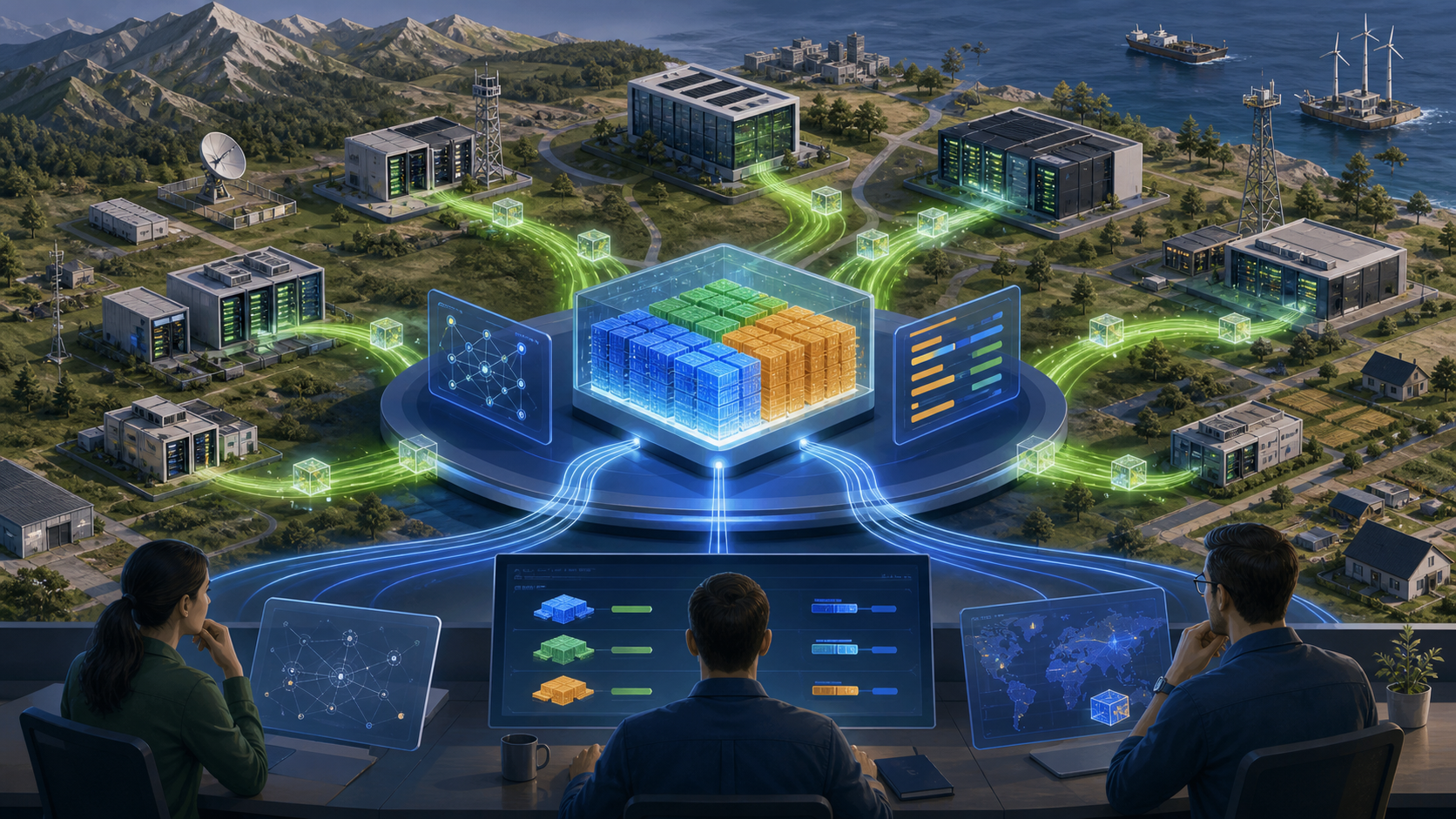
Distributed computing providers contributing spare GPU capacity to a transparent shared marketplace
  • Compute & Infrastructure

Five Compute Marketplaces Turn Idle GPUs Into AI Capacity

  • October 28, 2025
  • No comments
Total
0
Shares
0
0
0
0

AI demand is creating a market for computing capacity that sits outside the largest centralised clouds. Decentralised platforms connect organisations seeking GPUs with data centres, device operators, or other providers whose hardware would otherwise remain underused.

The model promises lower prices and broader access for workloads such as model training, inference, and 3D rendering. It also introduces unfamiliar questions around performance verification, settlement, geographic location, service consistency, and the role of tokens or blockchains. A cheap hour of compute has limited value if a training run cannot obtain the same configuration again tomorrow.

Five platforms illustrate that “decentralised compute” is not one architecture. Argentum AI, Aethir, Bittensor, Akash, and Flux each turn spare capacity or machine intelligence into a market in a different way.

Argentum and Akash Make Compute a Biddable Resource

Argentum treats GPU time like a tradable commodity. Enterprises post jobs, providers bid to execute them, and verifiable execution is paired with transparent settlement. Ethereum smart contracts hold payment in escrow until a task completes successfully.

The company also plans to work with GPU manufacturers on liquidity and monetisation for second-life hardware. If older accelerators can find workloads suited to their capabilities, providers gain revenue while buyers avoid paying for unnecessary premium capacity. Argentum recently closed an oversubscribed pre-seed round backed by Kraken, Banyan Ventures, Victor Morganstern, and Todd Bensen, giving the marketplace capital to develop that model.

Akash similarly operates an open marketplace, allowing users to specify CPU, memory, storage, and geographic requirements while providers compete for the work. Built on Cosmos SDK with delegated proof of stake, it claims pricing up to 80 percent below conventional cloud services. A 2025 NVIDIA partnership is bringing Blackwell B200 and B300 GPUs to the network.

Aethir, Bittensor, and Flux Broaden the Model

Aethir aggregates capacity from tier-three and tier-four data centres. Its network includes more than 3,000 NVIDIA H100 and H200 GPUs alongside over 62,000 edge devices. A partnership with Maitrix introduced AUSD, a dollar-pegged algorithmic stablecoin intended to reduce payment volatility. The combination targets buyers who want distributed supply without accepting an unpredictable unit of account.

Bittensor creates a marketplace for machine intelligence rather than renting hardware alone. Developers train models or supply AI capabilities across subnets in return for the network’s TAO token. Its Dynamic TAO design allows subnets to issue Alpha Tokens and compete for rewards through market mechanisms. That makes allocation depend on perceived value in each specialised network rather than a central scheduler.

Flux combines cloud services with a node-based blockchain model. FluxOS supports decentralised application deployment, FluxEdge rents GPU capacity, and Zelcore provides a multi-chain wallet. Its Proof-of-Useful-Work v2 approach is intended to replace conventional GPU mining with nodes performing real workloads.

Lower Prices Must Be Weighed Against Operational Proof

A marketplace is useful only if buyers can trust the capacity being sold. A job may require particular GPU memory, network performance, data location, confidentiality, or completion time. Transparent settlement does not automatically guarantee that an unfamiliar provider meets an enterprise security or compliance standard.

Workload portability also matters. Teams need software that can move between heterogeneous providers without excessive reconfiguration, and they need monitoring capable of comparing promised and delivered performance.

These platforms do not have to replace AWS, Google Cloud, or Azure to become significant. They can serve burst demand, experimental projects, rendering, or workloads where price outweighs deep managed-service integration. Hybrid use may let a team retain sensitive or tightly integrated work in a major cloud while directing flexible jobs to the marketplace.

Their shared opportunity is liquidity: transforming fragmented hardware into capacity a buyer can discover, price, verify, and use. The winners will be determined less by the novelty of decentralisation than by whether they make an irregular global supply of GPUs behave like dependable infrastructure.

Post Views: 60
Total
0
Shares
Share 0
Tweet 0
Pin it 0
Share 0
Topics
  • Compute
  • Decentralisation
  • GPUs
  • Infrastructure
  • Marketplace
Previous Article
Scientists collaborating around two generations of secure high-performance AI infrastructure
  • Compute & Infrastructure

AMD and the DOE Build Two Generations of Scientific AI

  • October 28, 2025
View Post
Next Article
A layered AI memory architecture moving active context between GPU memory, fast flash, and durable storage
  • Compute & Infrastructure

Agentic AI Needs a New Memory Tier Between GPUs and Storage

  • January 7, 2026
View Post

Stay Ahead of AI

Get the AI developments that matter, delivered to your inbox.

More AI News
AI-generated conceptual illustration of a glass test chamber separated from an abstract network by a disconnected cable, not actual Anthropic infrastructure
View Post
  • 3 min
  • AI Safety & Security

Anthropic’s Offline Evaluation Shift Leaves a Restart Question

  • October 10, 2026
AI-generated illustrative photograph of anonymous publishing colleagues discussing a blank book dummy, not actual employees of a named publisher
View Post
  • 3 min
  • Work & Society

Publishing’s AI Dispute Needs More Than a Yes-or-No Answer

  • October 10, 2026
AI-generated conceptual still life of a smartphone and two ceramic bowls, one containing unmarked coins, illustrating questions about users and paying customers
View Post
  • 3 min
  • Business & Markets

Olivia Moore’s Consumer AI Outlook Raises a Question: Who Pays?

  • October 9, 2026
AI-generated illustrative photograph of an anonymous civilian researcher examining papers in an archive, not an actual US Army facility or a named person
View Post
  • 3 min
  • Research & Papers

Thread AI’s Army Research Agreement Is Not Yet a Performance Result

  • October 9, 2026
AI-generated illustrative photograph of an anonymous adult designer sketching abstract curves in a studio, not a portrait of Jessica Hische or an image of the Muse logo
View Post
  • 3 min
  • Consumer & Creative

Human-Made AI Branding and the Limits of Client Endorsement

  • October 9, 2026
AI-generated conceptual editorial illustration of a digital workflow passing through a controlled gate with a separate return receipt, without readable text
View Post
  • 3 min
  • AI Agents

SAS Interview Puts the Lifetime of Agent Permissions Under Scrutiny

  • October 9, 2026
AI-generated conceptual editorial illustration of an open rulebook and balanced geometric AI nodes in a civic architectural setting, with no readable text
View Post
  • 3 min
  • Regulation & Government

CFR’s AI Oversight Proposal Puts the Rules for Writing Rules in Focus

  • October 9, 2026
AI-generated editorial illustration in a photographic style of adult learners using laptops in a bright Abu Dhabi-inspired training room, not a photograph of the actual programme
View Post
  • 3 min
  • Education & Media

Abu Dhabi Targets 20,000 Employees With AiNative Training as Capability Becomes the Test

  • October 9, 2026

Leave a Reply Cancel reply

Your email address will not be published. Required fields are marked *

Subscribe

Subscribe now to our newsletter

AI Updates
  • About
  • Newsletter
  • Contact
  • Privacy Policy
  • Terms of Use
Artificial Intelligence News

Input your search keywords and press Enter.

Go to mobile version