AI Updates
  • Latest News
  • Models & Research
    • AGI & Alignment
    • AI Agents
    • Foundation Models
    • Generative AI
    • Open Source AI
    • Research & Papers
    • Rankings & Benchmarks
  • Infrastructure
    • Chips & Semiconductors
    • Cloud & Networking
    • Data Centers & Neoclouds
    • Developer Platforms
    • Quantum Computing
  • Business
    • Big Tech Strategy
    • Mergers & Acquisitions
    • Public Markets
    • Startups & Funding
    • Talent & Leadership
    • Market Analysis
  • Applications
    • Consumer & Creative
    • Cybersecurity
    • Education & Media
    • Enterprise & Productivity
    • Finance & Legal
    • Healthcare & Life Sciences
    • Industry & Manufacturing
    • Science & Discovery
  • Robotics
    • Autonomous Vehicles
    • Drones & Defense
    • Edge AI & Embodied Intelligence
    • Robotics
  • Energy
    • Cooling & Water
    • Efficiency & Emissions
    • Electricity & Power Grids
    • Nuclear & Renewables
  • Policy & Society
    • AI Safety & Security
    • Copyright & Misinformation
    • Geopolitics
    • Privacy & Human Rights
    • Regulation & Government
    • Work & Society
Stay Ahead of AI

Get the AI developments that matter, delivered to your inbox.

Follow AI Updates
Facebook
Twitter
Instagram
  • Home
  • About
  • News
  • Contact
  • Newsletter
0
0
0
AI Updates AI Updates
AI Updates
  • Latest News
  • Models & Research
    • AGI & Alignment
    • AI Agents
    • Foundation Models
    • Generative AI
    • Open Source AI
    • Research & Papers
    • Rankings & Benchmarks
  • Infrastructure
    • Chips & Semiconductors
    • Cloud & Networking
    • Data Centers & Neoclouds
    • Developer Platforms
    • Quantum Computing
  • Business
    • Big Tech Strategy
    • Mergers & Acquisitions
    • Public Markets
    • Startups & Funding
    • Talent & Leadership
    • Market Analysis
  • Applications
    • Consumer & Creative
    • Cybersecurity
    • Education & Media
    • Enterprise & Productivity
    • Finance & Legal
    • Healthcare & Life Sciences
    • Industry & Manufacturing
    • Science & Discovery
  • Robotics
    • Autonomous Vehicles
    • Drones & Defense
    • Edge AI & Embodied Intelligence
    • Robotics
  • Energy
    • Cooling & Water
    • Efficiency & Emissions
    • Electricity & Power Grids
    • Nuclear & Renewables
  • Policy & Society
    • AI Safety & Security
    • Copyright & Misinformation
    • Geopolitics
    • Privacy & Human Rights
    • Regulation & Government
    • Work & Society
Scientists linking cellular experiments with an iterative AI drug-discovery workflow
  • Healthcare & Life Sciences

AI Drug Discovery Is Becoming a Data-Generation Business

  • August 3, 2026
  • No comments
Total
0
Shares
0
0
0
0

AI drug discovery is often described as a model race, but GSK’s new collaboration with Relation Therapeutics places a different asset at the centre: purpose-built biological data. The agreement, potentially worth up to $110 million, will fund experiments measuring how human cells respond to genetic changes and drug interventions, with the results used to train target-discovery models.

The partnership expands earlier work on fibrotic disease and osteoarthritis. It also illustrates a broader industry shift. When public datasets are noisy, duplicated or poorly matched to a disease, generating new experimental evidence can matter as much as building a larger algorithm.

The laboratory becomes part of the learning loop

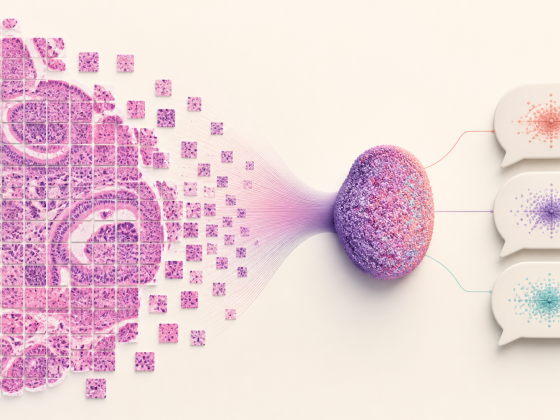
Relation calls its approach Lab-in-the-Loop. Laboratory work—including tissue profiling, single-cell and spatial transcriptomics, sequencing and functional assays—produces observations that computational systems can analyse. Machine learning then helps identify targets, prioritise candidates and design the next experiment.

Perturbation studies are particularly relevant. Researchers change genes or apply interventions and measure the resulting cellular characteristics. That provides information about biological response rather than correlation alone, giving models a stronger basis for proposing targets that can later be validated.

The new collaboration will train models within Relation’s MORGAN platform, according to the source. The companies have not disclosed which diseases the new programme will prioritise, how performance will be assessed or how the agreement’s potential value is divided between upfront and milestone payments. The $110 million figure should therefore be read as a maximum deal value, not guaranteed revenue.

Earlier projects combined human genetics, patient tissue, single-cell multi-omics, functional assays and machine learning. Relation’s Osteomics programme applies a similar strategy to bone disease, combining patient-derived samples with imaging, genomics, proteomics and clinical phenotype data.

More cells do not automatically produce a better model

Public repositories remain indispensable. A 2025 review cited in the source noted that CZ CELLxGENE alone provides more than 100 million standardised cells, alongside resources such as the Human Cell Atlas and NCBI Gene Expression Omnibus.

Scale brings complications. Studies can use different sampling methods, sequencing protocols and processing pipelines. Technical noise and batch effects may obscure biological signal, while overlapping cells across repositories can distort training and leak information between training and test sets.

Recent research also challenges a simple scaling assumption. A Nature Methods study trained 400 models across 6,400 experiments using a corpus of 22.2 million cells. The single-cell foundation models tended to plateau after seeing only part of the available data rather than improving consistently as the corpus grew.

Another evaluation of Geneformer and scGPT found that the foundation models did not consistently beat simpler methods on several zero-shot tasks. Neither result proves that small or proprietary datasets are inherently superior. They show that model capacity, data diversity, experimental quality and compute must be balanced—and that more observations can add redundancy rather than knowledge.

Specialised datasets are becoming strategic assets

Pharmaceutical collaborations increasingly combine platform access with data licensing or new data generation. The source cites GSK’s separate $37.5 million agreement with Ochre Bio involving human liver data, and a $200 million AstraZeneca–Pathos AI arrangement with Tempus covering de-identified clinical, genomic and imaging data from more than 150,000 patients.

These figures demonstrate commercial interest, not clinical success. A target predicted from a rich dataset still needs biological validation, drug development and trials. Proprietary data can also be difficult for outsiders to reproduce or independently benchmark.

For GSK and Relation, the practical test will be whether the combined workflow identifies targets that survive experimental challenge better or faster than existing approaches. Useful evidence would include prospective validation rates, performance on unseen patient samples and transparent comparisons with simpler baselines.

The collaboration makes a credible point: in biological AI, the experiment is not merely a source of training material but part of the product. Competitive advantage may come from choosing what to measure, controlling how it is measured and closing the loop between prediction and evidence—not simply accumulating the largest possible collection of cells.

Post Views: 110
Total
0
Shares
Share 0
Tweet 0
Pin it 0
Share 0
Topics
  • BiologicalData
  • Biotech
  • DrugDiscovery
  • GSK
  • Multiomics
Previous Article
Clinical documentation specialists reviewing a difficult handwritten medical record with AI assistance
  • Healthcare & Life Sciences

Guardoc’s Clinical AI Escalates Only the Hardest Documents

  • July 28, 2026
View Post
Next Article
A pathologist examining a whole-slide tissue image alongside an AI diagnostic dialogue
  • Healthcare & Life Sciences

PRISM2 Turns Pathology Slides Into Diagnostic Dialogue

  • August 5, 2026
View Post

Stay Ahead of AI

Get the AI developments that matter, delivered to your inbox.

More AI News
Editorial illustration of a creative studio desk with abstract image panels and a film strip emerging from a simple light source, representing a startup pivot into AI-generated campaign assets
View Post
  • 3 min
  • Startups & Funding

Melius Raises a $20 Million Series A After Rebuilding Its Advertising AI Business

  • October 7, 2026
Conceptual photograph of a clean data-center aisle with server cabinets and a concentrated warm light at the far end, representing infrastructure growth and concentrated demand
View Post
  • 3 min
  • Data Centers & Neoclouds

Lambda Seeks Up to $4 Billion as Its IPO Plans Meet a Concentrated Backlog

  • October 7, 2026
Minimal editorial illustration of a small luminous courier-like form approaching a translucent gate, representing permission-based access for an AI agent
View Post
  • 3 min
  • AI Agents

Website Permissions Are Becoming a Bottleneck for Consumer AI Agents

  • October 7, 2026
Illustrative photograph of a researcher examining abstract geometric research sheets at a sunlit desk, representing careful review of AI-assisted mathematics
View Post
  • 3 min
  • Research & Papers

OpenAI’s Planned Math Release Reopens a Dispute Over Scientific Disclosure

  • October 7, 2026
Abstract editorial illustration of an open geometric lattice and flowing translucent forms, representing a model preview and future access to weights
View Post
  • 3 min
  • Foundation Models

Mistral Large 4 Preview Separates Benchmark Claims From Its Planned Open-Weight Release

  • October 6, 2026
Conceptual illustration of a small connected infrastructure cluster inside layered translucent boundaries, representing data control rather than proven security
View Post
  • 3 min
  • AI Safety & Security

Malaysia Links Its AI Nation Ambition to Data Security and Digital Trust at CyberDSA

  • October 6, 2026
Illustrative photograph of a network technician inspecting fibre connections in an unbranded telecommunications equipment room
View Post
  • 3 min
  • Enterprise & Productivity

Deutsche Telekom Sets AI Savings Targets While Planning Reinvestment and Revenue Growth

  • October 6, 2026
Conceptual editorial photograph of paper-like layers revealing a subtle granular pattern under angled light, not an actual text watermark or detector
View Post
  • 3 min
  • Copyright & Misinformation

OpenAI’s EU Text Watermark Plan Highlights Limits of AI Authorship Detection

  • October 6, 2026

Leave a Reply Cancel reply

Your email address will not be published. Required fields are marked *

Subscribe

Subscribe now to our newsletter

AI Updates
  • About
  • Newsletter
  • Contact
  • Privacy Policy
  • Terms of Use
Artificial Intelligence News

Input your search keywords and press Enter.

Go to mobile version